
How Can Language Influence Our Thoughts, Emotions, and Behaviors?
- Linguistic Relativity, popularly called the Sapir-Whorf hypothesis, refers to the idea that the language a person speaks may influence their worldview, thought, and even how they experience and understand the world.
- Language may focus our perception and attention on particular aspects of experience.
- Some research suggests the influence of language is not limited to just developing a wider vocabulary for categorizing emotions. Language may coordinate our sensations into specific perceptions.
- Ludwig Wittgenstein, a break-through 20th century philosopher, introduced the radical concept of “language games”.
- “If we want to know the meaning of the language, we need to know how it is being used – “meaning is use”.”
- At the heart of his concept of ‘language games’ is the idea that words only have meaning because of their context and therefore we have to be careful to know which ‘game’ we are playing.
- For example, the meaning of the word goal, significant changes with different context.
Courtesy share: Dave J.
- Humans are not able to “stop” a word/thought, we are able to introduce a new word/thought.
- Changing the words/thoughts over time stimulates neuroplasticity that can result in unconscious habitual change.
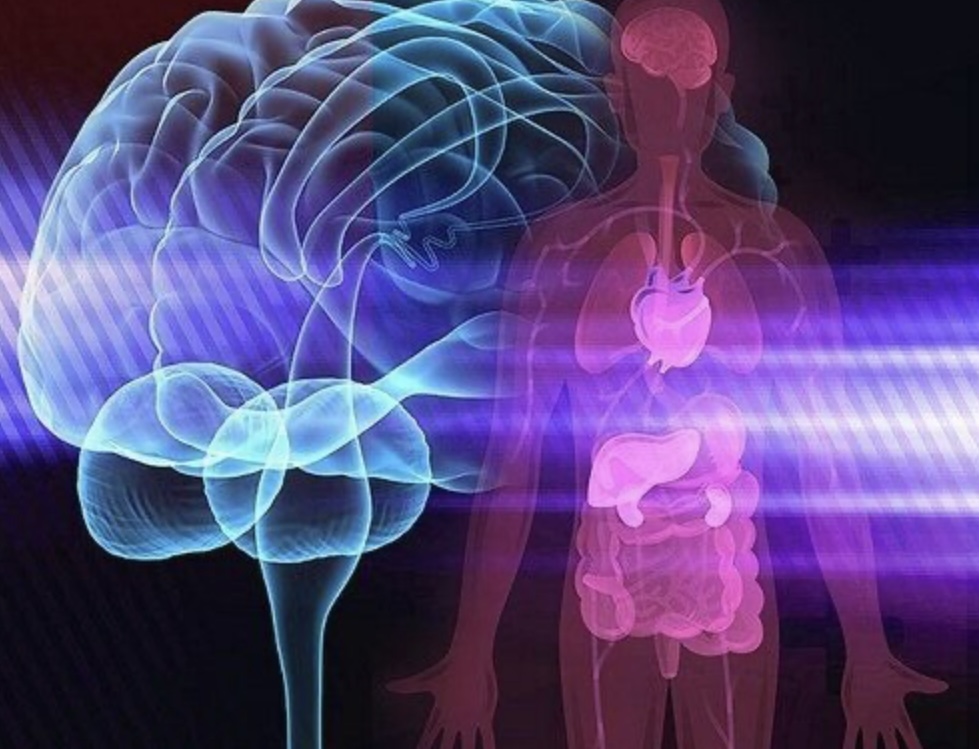
- Our brain keeps the score, our body is the scorecard – we don’t feel things in our brain, we feel them in our body.
- Neuroception: Feelings (senses) are unconsciously perceived in our midbrain.
- How our nervous system ‘interprets’ a situation (perception) determines our autonomic nervous system response.
- Fight or flight
- Freeze/shut down
- Interpersonal connection, emotional flexibility and behavioral balance
- How our nervous system ‘interprets’ a situation (perception) determines our autonomic nervous system response.
- Feelings and emotions are not interchangeable concepts
- When we create/identify an emotion with words/language (cognition), we are giving meaning to our sensory experience (feelings).
- Neuroception: Feelings (senses) are unconsciously perceived in our midbrain.
- For example, the ability to detect displeasure from a person’s face is universal. The words “angry”, “afraid”, and “sad,” help us further distinguish what kind of displeasure we observe in a facial expression.

- Language can influence mindset, our set of beliefs that shape how we make sense of the world and ourselves.
- A growth mindset reinforces the fact that our abilities are malleable. Our brains can learn and change (neuroplasticity) in order to achieve emotional and behavioral growth, as well as improved physical health.
- A key feature of a growth mindset is to attach our motivation to the effort itself instead of the outcome. For example, “recovery is a journey, not a destination”.
| Fixed Mindset | Growth Mindset |
| Either I’m good at it or I’m not. | I can learn to do anything I want. |
| That’s just who I am. I can’t change it. | I’m a constantly evolving work in progress. |
| If you have to work hard, you don’t have the ability. | The more you challenge yourself, the smarter you become. |
| If I don’t try, then I won’t fail. | I only fail when I stop trying. |
| That job position is totally out of my league. | That job position looks challenging. Let me apply for it. |
Start: Something feels off… Which category fits best?
1. BODY (Physical)
Am I hungry, tired, sick, or dehydrated?
If YES ➜ Eat, hydrate, rest, meds → Reassess
If NO ➜ Try next category
2. FEELINGS (Emotional)
Am I feeling something big?
If YES ➜ Name it, feel it, don’t fix it → Reassess
If NO ➜ Try next category
3. THOUGHTS (Cognitive)
Is my thinking extreme or spiraling?
If YES ➜ Find facts, reframe → Reassess
If NO ➜ Try next category
4. ENVIRONMENT
Am I overstimulated?
If YES ➜ Reduce input, quiet time → Reassess
If NO ➜ Try next category
5. AVOIDANCE
Am I avoiding something?
If YES ➜ Do smallest step (10 min) → Reassess
If NO ➜ Try next category
6. CONNECTION
Do I feel disconnected?
If YES ➜ Reach out, meeting, text → Reassess
If NO ➜ Try next category
7. CONTROL
Am I trying to control something I can’t?
If YES ➜ Let go, focus on what I can control → Reassess
If NO ➜ Try next category
Courtesy share: Cindy S.
An Exercise of Language Awareness:
- Consider the words you use references your addiction and recovery
- Examples: alcoholic vs alcohol use disorder, sober vs abstinent, , sobriety vs recovery, recovery vs discovery, empowered vs powerless etc.
- Now identify the emotions that surface with different words
- Finally, try to identify physical sensations that occur with the emotions
An Evidence-based Tool to Change Unhelpful Language:
- Identify 1 or 2 most frequently used unhelpful words
- Identify replacement words
- Engage a partner for coaching/support
- Therapist, trusted family and/or friends, Lifering
- Use other prompts (e.g. posted notes, mantra, mindfulness practice).
- This link has helpful guidelines. 445896.pdf
Proposed Questions for Thought/Sharing:
- Did this information spark any curiosity and how?
- Have you changed any habitual language/words to enhance your wellness and support your recovery?
- Are there habitual language/words that you want to change to enhance your wellness and support your recovery?
Disclaimer
This summary is for general informational purposes only and does not constitute the practice of medicine or other professional health care services, including the giving of medical advice, and no doctor/patient relationship is formed.
Leave a Reply