
We cultivate mindfulness as a way of tapping into our inner resources to cope with stress more effectively and reduce emotional and physical suffering.
Mindfulness Practice Provides:
-a way of relating directly with whatever is happening in your life,
-a way of empowering yourself by taking charge of your life, by consciously and systematically noticing and responding to your own stress and pain, and to the challenges and demands of life itself.
We tend to want to prolong the pleasant and avoid the unpleasant.
WHAT is Mindfulness?
“The awareness that arises, from paying attention, on purpose, in the present moment, and without judgment”.
MBSR is a secular, effective, scientifically researched and evidence-based method for reducing physical and psychological suffering while building resilience, balance, and peace of mind.
Neuroplasticity! Mindfulness practice can change the brain by increasing gray matter in areas associated with memory, emotional regulation, and empathy, while also reducing activity in the amygdala, which is linked to stress and anxiety. These changes can enhance attention, improve emotional regulation, and promote overall well-being.
Research: https://pmc.ncbi.nlm.nih.gov/articles/PMC11591838/
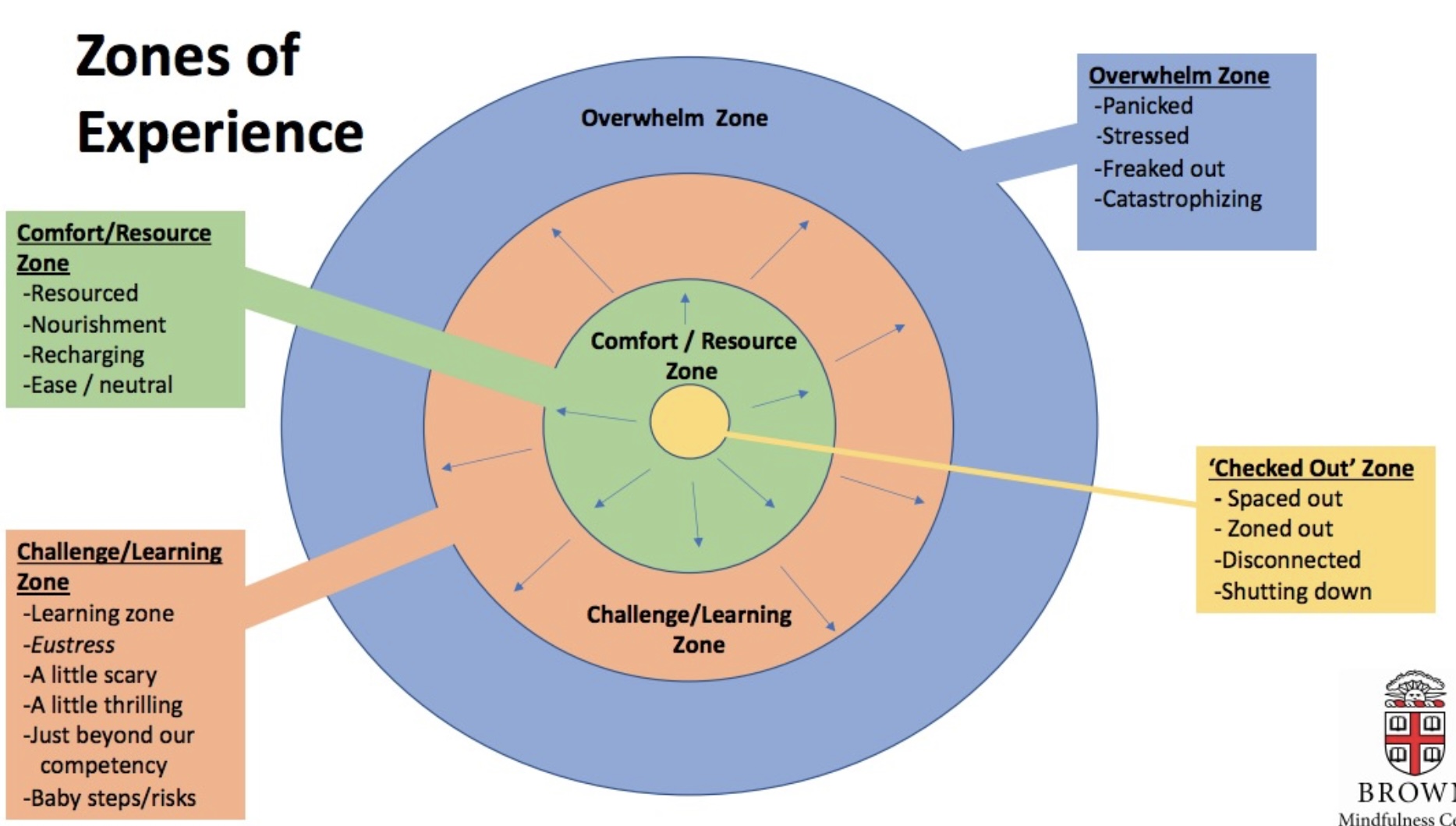
Zones of Experience

Mindfulness: How to begin a practice.
Formal and Informal
Body Scan
Sitting meditation practice with awareness of breath: Start with 1 minute… 5 minutes
Choose one routine activity and pay mindful attention to that same activity
every day: taking a shower, brushing your teeth, washing dishes. Keep it simple.
Eat one meal with all your senses: Seeing, smelling, tasting your food, aware and present. Or…take the first 3-5 bites in this way, or start with a snack. Share…
Practice Pausing. A few times a day, pause in your activities and bring awareness to the present moment, attending to what can be known through your senses, in the body, as well as whatever thoughts, mood and emotions are present. Allow yourself to be present to what is actually happening, even if it is challenging. It doesn’t have to be for long (you might try 1-3 minutes). Rest in this space in stillness for a few moments, and as best as you can, let go of whatever story, worries, or “to do” list is present. Rest in being, then return to the task at hand. Notice the effect this has as you proceed.
Awareness of Pleasant Events Calendar
Instructions: This week, be aware of one pleasant event or experience each day while it is happening. At a later time, on a calendar such as the one provided here, record in detail what it was and your experience of it.
| What was the experience? | Were you aware of the pleasant feelings while the experience was happening? | How did your body feel, in detail, during this experience? Describe the sensations you felt. | What moods, feelings and thoughts accompanied this experience at the time? | What sensations, thoughts or mood are in your mind now as you write this down? | |
| Monday | |||||
| Tuesday | |||||
| Wednesday | |||||
| Thursday | |||||
| Friday | |||||
| Saturday | |||||
| Sunday |
Leave a Reply