

GLP – 1 agonists Role in addiction
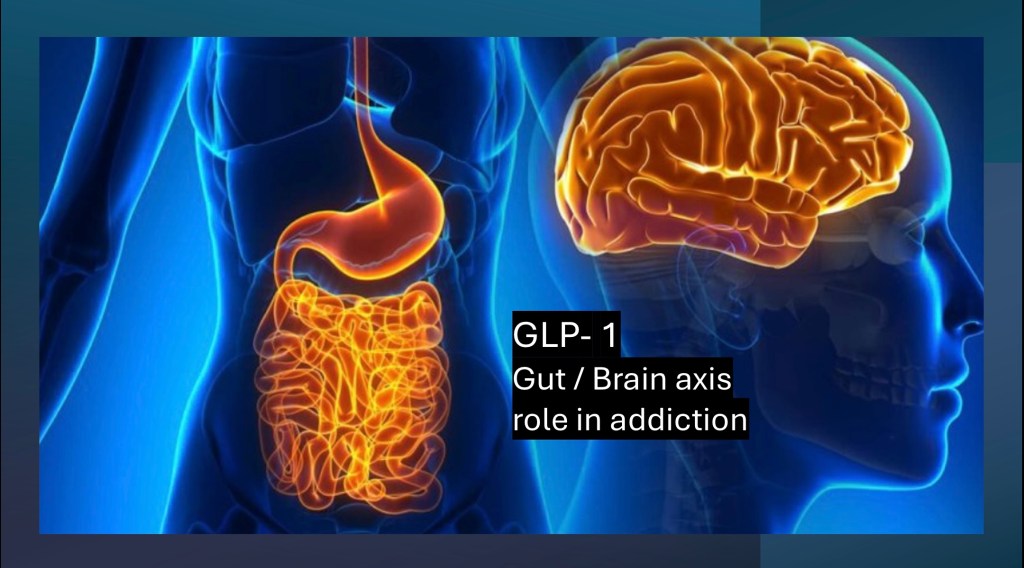
The development of a novel class of medications for treatment of type 2 diabetes and obesity has become a commercial success with manufacturers struggling to meet demand. Ozempic, produced by Novo Nordisk is expected to reach a market size of 10.99 billion usd in 2024. The overall market is expected to reach 133.5 billion by 2030.
The drugs are based on the hormone GLP-1 (glycogen-like protein 1) which is produced by intestinal cells as part of normal metabolic control and regulation of glucose and energy stores.
Following introduction of these agents in clinical practice reports emerged of incidental decreases in alcohol, nicotine and other drug use by patients. This was attributed to spontaneous decreased desire for these substances. As the drugs were intended to act only on peripheral metabolism these findings were unexpected.
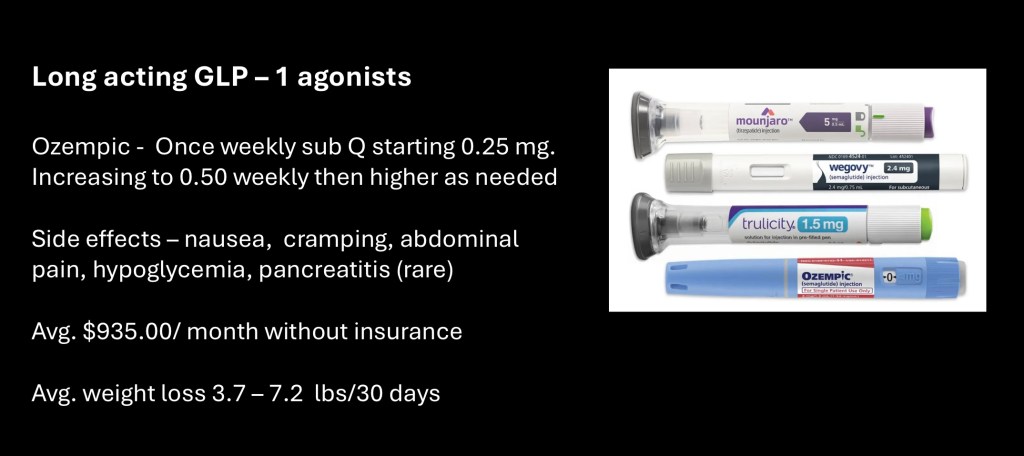
The intestinal peptide and synthetic analogues have been known for some time however the native protein degrades within 2-3 minutes limiting clinical utility. More recent development of long acting formulations allowed for a weekly subcutaneous injectable dosing schedule. Single doses are available in preloaded syringes suitable for self injection.
Dose generally begins at 0.25 mg for 4 weeks to form a baseline level. The dose is then titrated to desired effect with monitoring of weight and blood glucose levels.
Common side effects may include nausea, cramping, abdominal pain, and low blood sugars. Pancreatitis has been rarely reported.
Average weight loss for semiglutide is dose dependent and averages 3.7 – 7.2 lbs/30 days. Cost may be prohibitive averaging around $935.00/month and may not be covered by medical insurance.
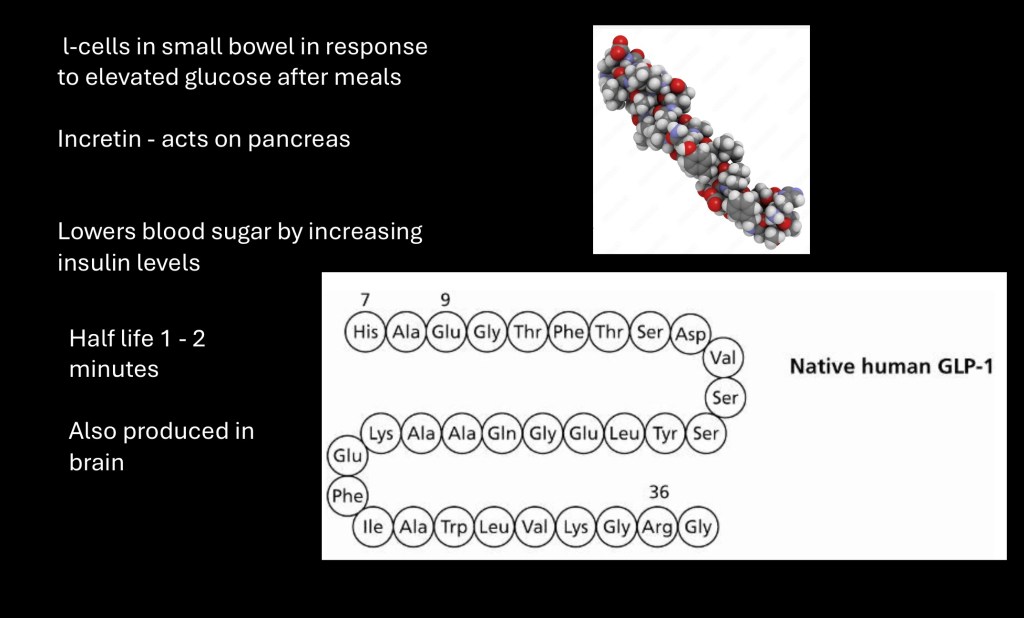
Glycogen like protein is produced by cells lining the small intestine and released into the bloodstream as the nutrients pass through the bowel. It is short acting and degrades quickly. Primary site of activity is on islet cells in the pancreas where it stimulates insulin release and suppresses glycogen release. Hormones with this type of action are known as Introns. The primary effect is to lower blood glucose levels.
GLP is catabolic, it uses energy stores and results in metabolic energy production and weight loss.
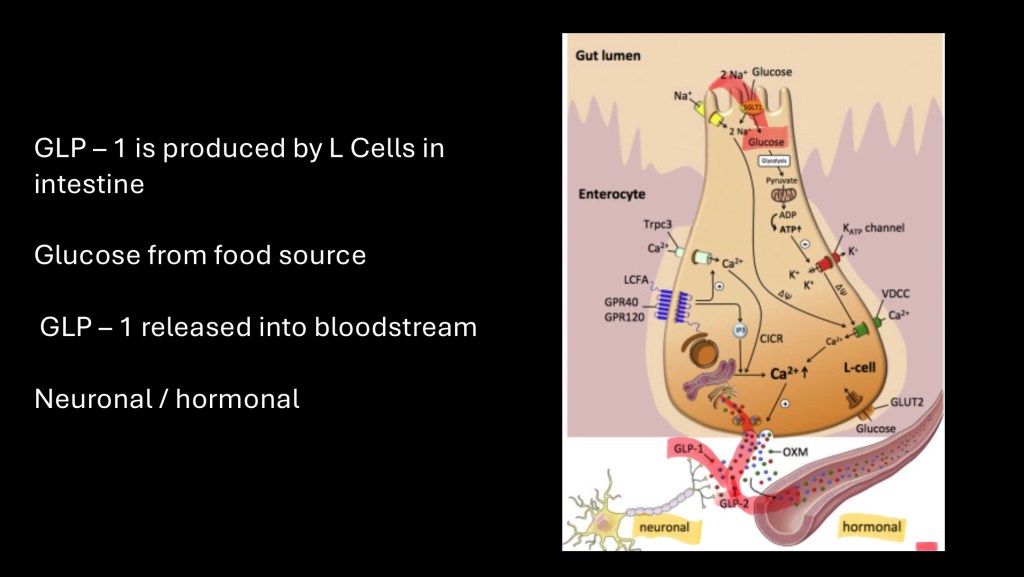
GLP-1 is produced by L-cells in the lining of the small intestine. When a glucose surge is detected as food products pass through the intestine it triggers a reaction in L cells as shown above. GLP then enters the bloodstream and is distributed to the pancreas and other organs.
GLP-1 is also produced in the brain stem and acts on receptors found in deep brain structures.
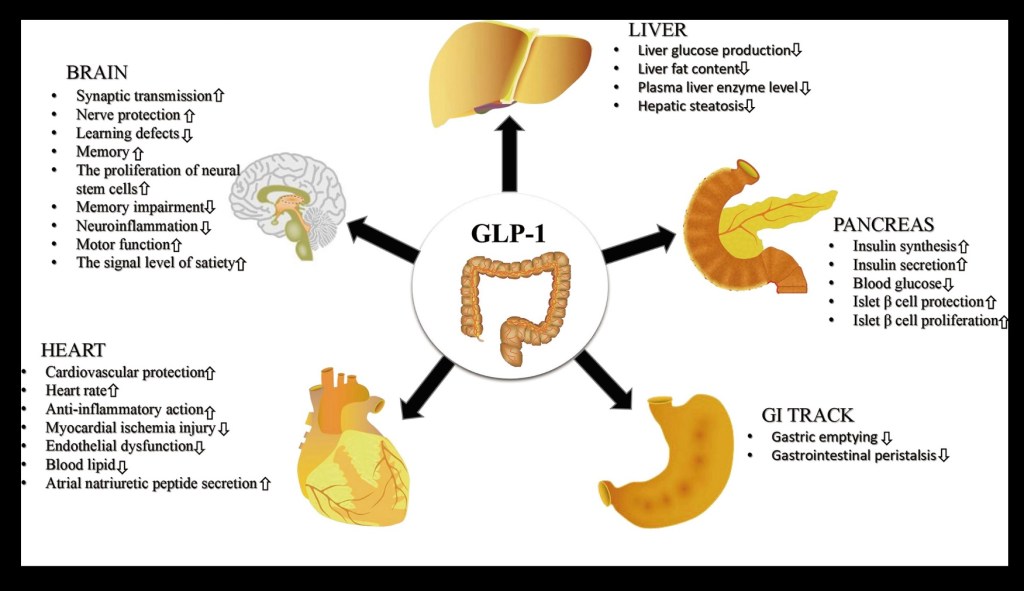
GLP has widespread effects. In addition to metabolic effects GLP slows down gastric emptying, decreases fatty deposits in the liver and has other systemic effects. Potential use for treatment of non-alcoholic fatty liver disease is under investigation.
In addition to releasing insulin from the pancreas GLP activates additional insulin production thus replenishing insulin stores. It also recruits additional beta cells further improving pancreatic function.
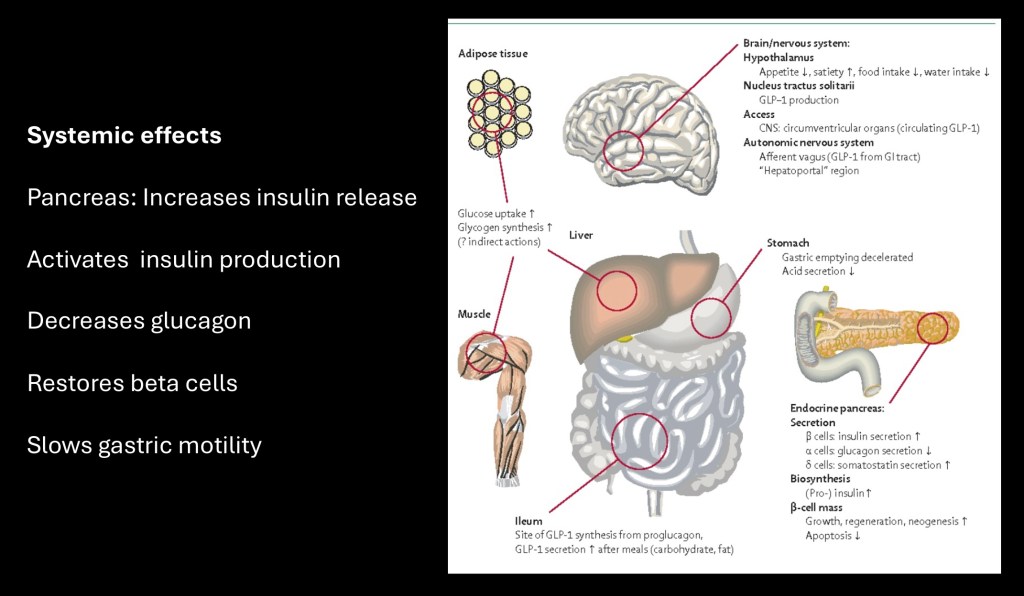
GLP is thought to have a role as an anti inflammatory agent decreasing inflammation in the gut and central nervous system. It is protective against brain ischemia. It also improves oxygenation of the heart muscle improving cardiac function.
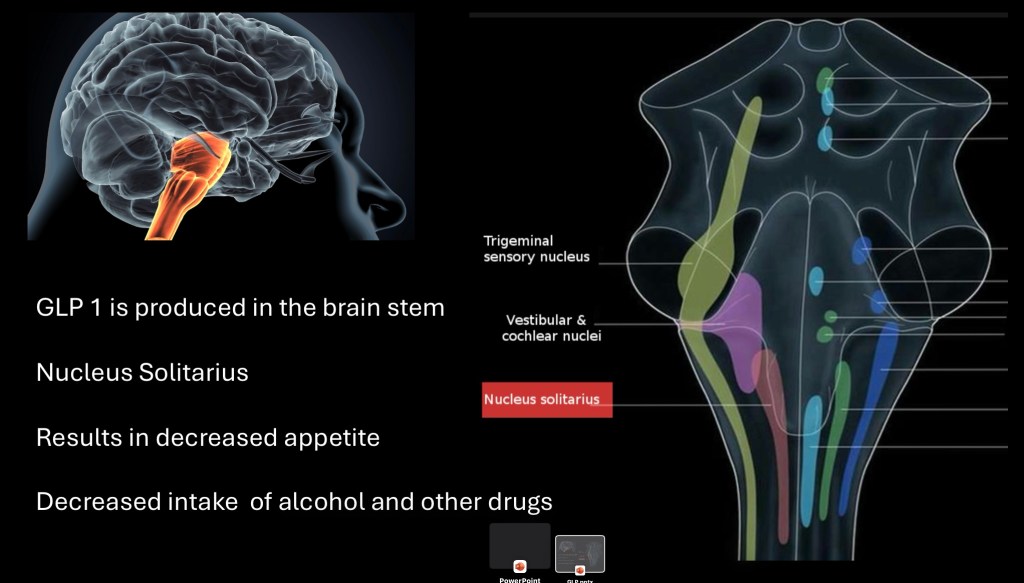
Following reports of spontaneous reduction in use of alcohol, nicotine, cocaine, and other substances attention has turned to the central nervous system and activities affected by GLP. In addition to intestinal cells GLP-1 is produced in the brain stem and receptors are present in key brain structures involved in substance use disorders.
GLP is produced in the nucleus solitarius within the brain stem shown above. Cranial nerve nuclei are in this region including tracts from the vagus nerve.
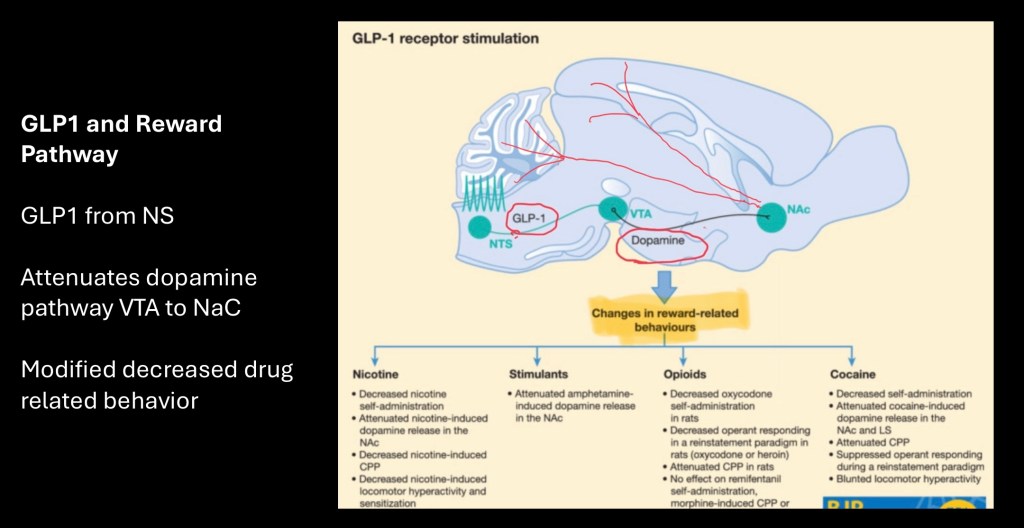
This diagram of the mouse brain demonstrates neural connections extending from the nucleus solitarius to the origin of dopamine neurons in the ventral tegmental area. From there dopaminergic neurons terminate at the nucleus accumbens where there are efferent and afferent pathways to the frontal cortex, motor cortex and other structures.
It is this pathway thought to be involved in decreased drive to consume psychoactive substances along with changes in appetite. There is a growing body of evidence from pre-clinical animal studies and early investigations in humans demonstrating changes consistent with reduced addictive behaviors. The precise mechanism of action is only partially understood.
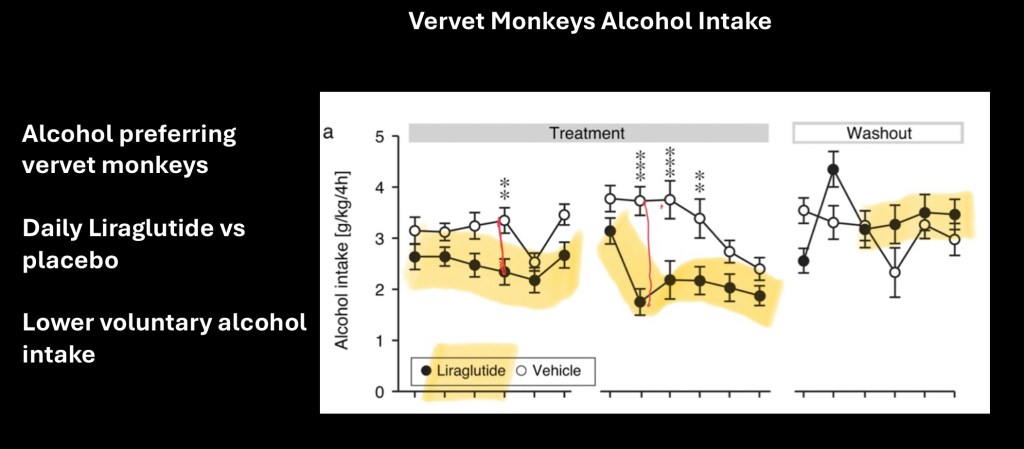
This is from a primate study of alcohol preferring Vervet monkeys. Following five weeks of daily access to alcohol solution the animals demonstrating higher alcohol preference were selected for the test. One half of the population was given daily injection with the GLP-1 agonist Liraglutide along with an 8 hour access to alcohol with a placebo control group.
Results are shown above. The Liraglutide group consumed significantly lower average volumes of alcohol compared to the control group. The effect was no longer present following a washout period.
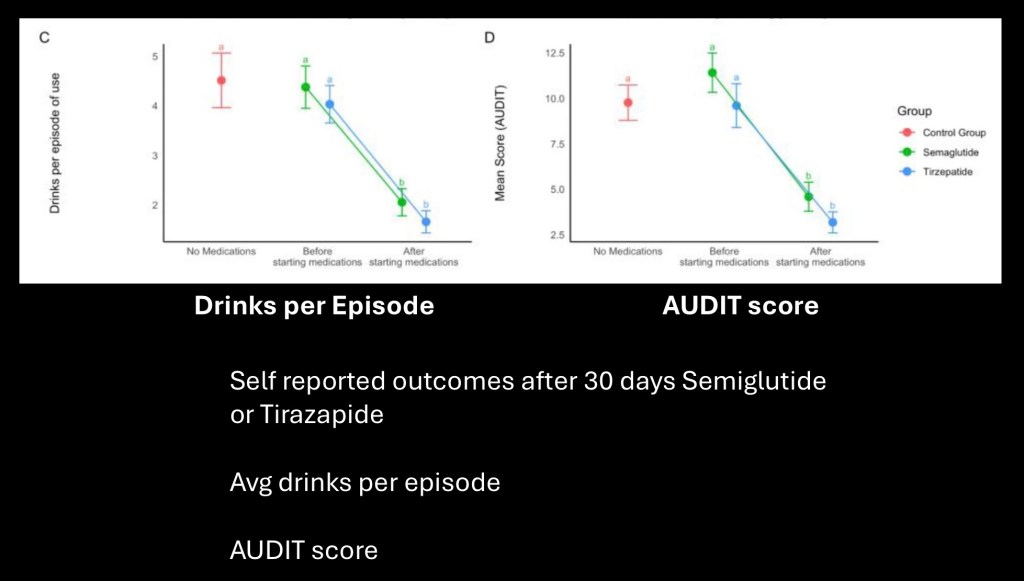
This is a survey study of self reported alcohol consumption in individuals recruited from the social media site Reddit active in Semiglutide/Tirazepide discussions. Outcomes shown here reflect average drinks per episode and Alcohol Use Disorders Identification Test (AUDIT) score. Results before and after 30 days of treatment were averaged.
The study does indicate a significant decrease in number of alcohol drinks and AUDIT score. However it is a preliminary study with significant limitations. This and other preclinical studies indicate strong evidence to support larger controlled studies for this indication.
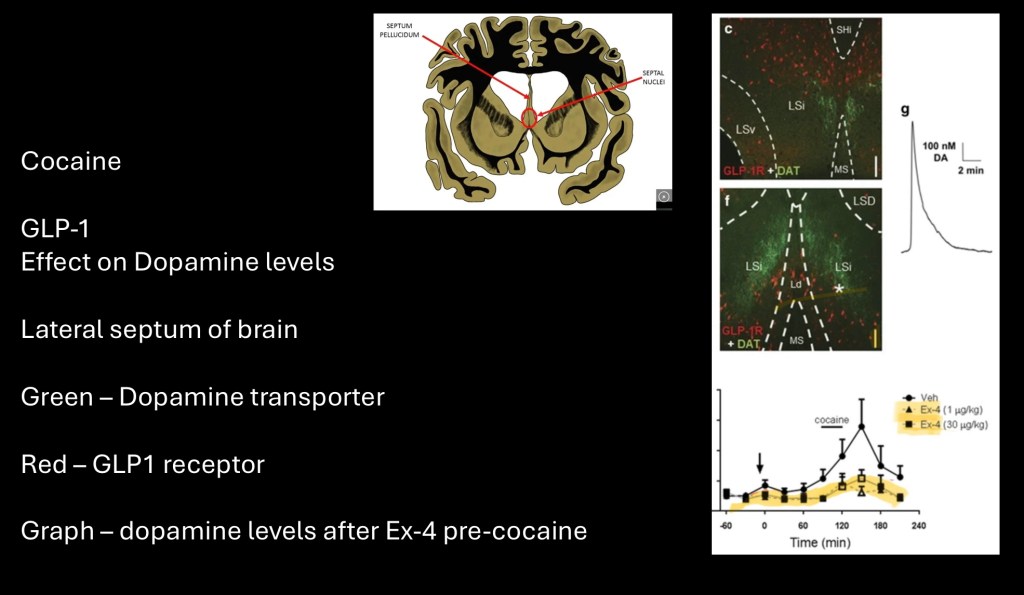
While GLP-1 receptors have been found in brain cells a precise mechanism has not yet been characterized. This was a mouse study looking at activity in the lateral septum. This structure is in close proximity to the Nucleus Accumbens and Hippocampus. Both structures are known to be active in substance use disorders.
Using fluorescent markers GLP-1 receptors labeled in red are identified. Within the same area Dopamine transporter is labeled in green. Dopamine levels are represented in the lower graph following cocaine administration, The highlighted curves reflect dopamine levels following Extendin-4. The non-highlighted upper curve reflects a dopamine spike caused by cocaine which was blunted with the GLP-1 agonist present.
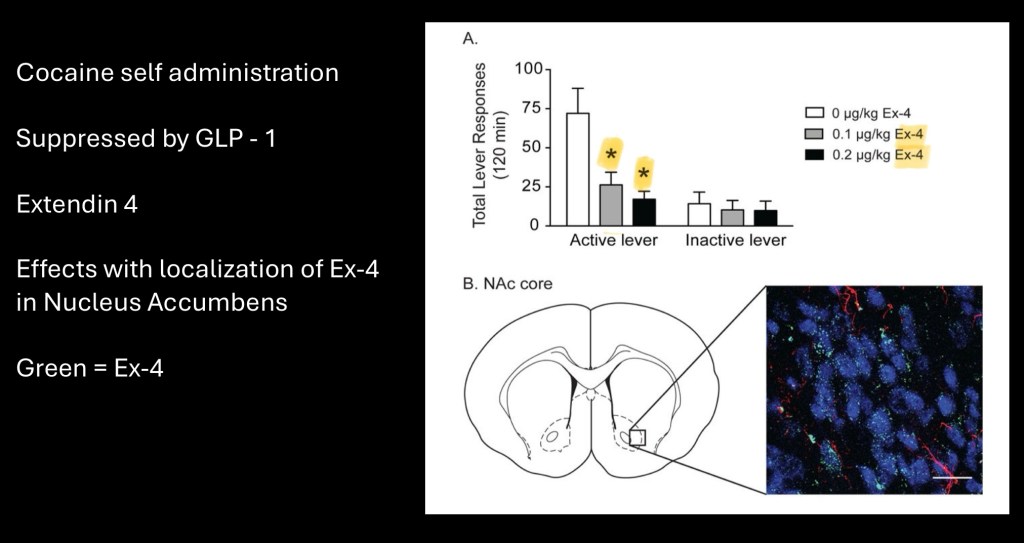
This study required the animals to actively press a lever to obtain the cocaine reward. Grey and black bars reflect number of lever presses observed with differing doses of Extendin-4 present. Significantly decreased drug seeking behavior was observed in the treated rats.
The picture toward the bottom is a micrograph of a sample of the Nucleus Accumbens. Small green dots are fluorescent labeled GLP-1 surrounding neurons indicating that this structure is involved in the observed behavior.
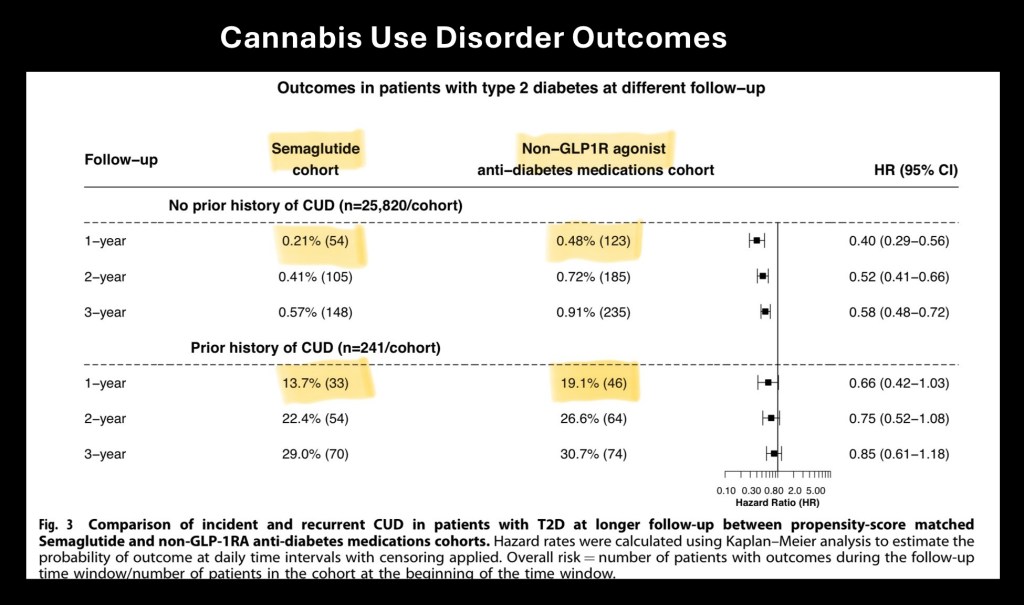
This study looked at a chart review from a large regional health care system. The database was searched for patients with a diagnosis of Type 2 diabetes being treated with a GLP-1 type agent (semiglutide) compared to patients treated with another type of medication.
Subjects with a previous additional diagnosis of Cannabis Use Disorder (CUD) were compared to a matched group without this history. A three year follow-up was performed screening for any subsequent incidence of CUD.
Both groups showed significant reduction in CUD with Semiglutide treatment compared with controls. The effect is most prominent in the first year with a narrower margin by the third year.
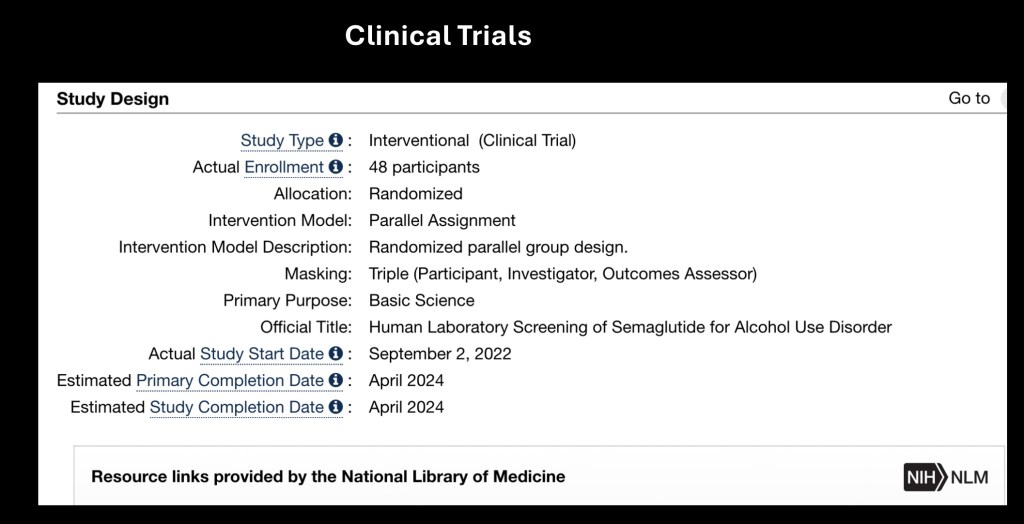
Larger controlled clinical trials are currently underway. This placebo controlled study will evaluate treatment with semiglutide in subjects with active Alcohol Use Disorder. Outcomes include volume of alcohol consumed during the study period as well as subjective effects of alcohol. Cigarette use will be evaluated as a secondary outcome. The study is expected to be completed in April 2024.
…………………………………………………………………………..
Since their introduction agents based on activity of the hormone and central nervous system modulator GLP-1 (Ozempic, Wegovy) have been widely accepted and clinically effective.
People using these agents have reported decreased desire for and consumption of alcohol, nicotine, cocaine, and opiates. It is thought that the persistence of the agent compared to the native hormone allows greater concentrations to cross the blood-brain barrier where it can act on GLP-1 receptors and attenuate neural pathways involved in addiction.
As there are no available effective pharmacological treatments for some of the substance use disorders there is a great deal of interest in an application for treatment of SUD in people also requiring treatment for type two diabetes or obesity. It may also be possible to develop drugs working on the same pathway without the metabolic effects of current agents. Double blind placebo controlled studies are currently in progress.
For information and education purposes only. Images and data obtained from sources freely available on the World Wide Web. This post should not be considered medical or professional advice.
REFERENCES
Semaglutide and Tirzepatide reduce alcohol consumption in individuals with obesity
- Fatima Quddos, Zachary Hubshman, Allison Tegge, Daniel Sane, Erin Marti, Anita S. Kablinger, Kirstin M. Gatchalian, Amber L. Kelly, Alexandra G. DiFeliceantonio & Warre
https://www.nature.com/articles/s41598-023-48267-2#Sec14
……………………………………………
…………………………………..
Semaglutide reduces alcohol intake and relapse-like drinking in male and female rats
Cajsa Aranäs Christian E. Edvardsson Olesya T. Shevchouk Qian Zhang
Sarah Witley
Lancet Open AccessPublished:June 07, 2023DOI:https://doi.org/10.1016/j.ebiom.2023.104642
https://www.thelancet.com/journals/ebiom/article/PIIS2352-3964(23)00207-4/fulltext
………………………………………………
The glucagon-like peptide-1 (GLP-1) analogue semaglutide reduces alcohol drinking and modulates central GABA neurotransmission
Vicky Chuong,1,2 Mehdi Farokhnia,1 Sophia Khom,3,4 Claire L. Pince,1,2 Sophie K. Elvig,2
JCI Insight. 2023;8(12):e170671. https://doi.org/10.1172/jci.
The therapeutic potential of glucagon-like peptide-1 for persons with addictions based on findings from preclinical and clinical studies
Institute of Neuroscience and Physiology, Department of Pharmacology, The Sahlgrenska Academy at the University of Gothenburg, Gothenburg, Sweden
Front. Pharmacol., 29 March 2023
Sec. Neuropharmacology
Volume 14 – 2023 | https://doi.org/10.3389/fphar.2023.1063033
https://www.frontiersin.org/journals/pharmacology/articles/10.3389/fphar.2023.1063033/full
……………………………………………………………………..
Kooij, K.L., Koster, D.I., Eeltink, E., Luijendijk, M., Drost, L., Ducrocq, F., Adan, R.A.H., GLP-1 receptor agonist semaglutide reduces appetite while increasing dopamine reward signaling, Neuroscience Applied (2023), doi: https://doi.org/10.1016/j.nsa.2023.103925.
https://www.sciencedirect.com/science/article/pii/S2772408523029071
…………………………………………………….
Dopamine in the Regulation of Glucose Homeostasis, Pathogenesis of Type 2 Diabetes, and Chronic Conditions of Impaired Dopamine Activity/Metabolism: Implication for Pathophysiological and Therap
by Giuseppe Lisco 1
, Anna De Tullio 1, Michele Iovino 1, Olga Disoteo 2, Edoardo Guastamacchia 1, Vito Angelo Giagulli 1
Biomedicines 2023, 11(11), 2993; https://doi.org/10.3390/biomedicines11112993
https://www.mdpi.com/2227-9059/11/11/2993
………………………………………………………….
Activation of glucagon-like peptide-1 receptors in the nucleus
accumbens attenuates cocaine seeking in rats
Nicole S. Hernandez1,2,*
, Bernadette O’Donovan3,*
, Pavel I. Ortinski3, and Heath D.
Addict Biol . 2019 March ; 24(2): 170–181. doi:10.1111/adb.12583.
………………………………………………………..h
Glucagon-like peptide 1 receptor activation regulates cocaine actions and dopamine homeostasis in the lateral septum by decreasing arachidonic acid levels
- I A Reddy, J A Pino, P Weikop, N Osses, G Sørensen, T Bering, C Valle, R J Bluett, K Erreger, G Wortwein, J G Reyes, D Graham, G D Stanwood, T A Hackett, S Patel, A Fink-Jensen, G E Torres & A Galli
https://www.nature.com/articles/tp201686
…………………………………………………………………
Tirzepatide reduce alcohol consumption in individuals with obesity. Sci Rep 13, 20998 (2023). https://doi.org/10.1038/s41598-023-48267-2
https://www.nature.com/articles/s41598-023-48267-2
…………………………………………………………
Emerging Role of GLP-1 Agonists in Obesity: A Comprehensive Review of Randomised Controlled Trials
by Mihaela-Simona Popoviciu 1, Lorena Păduraru 1, Galal Yahya 2,3
Int. J. Mol. Sci. 2023, 24(13), 10449; https://doi.org/10.3390/ijms241310449
https://www.mdpi.com/1422-0067/24/13/10449
………………………………………………………………………..
Wang, W., Volkow, N.D., Berger, N.A. et al. Association of semaglutide with reduced incidence and relapse of cannabis use disorder in real-world populations: a retrospective cohort study. Mol Psychiatry (2024). https://doi.org/10.1038/s41380-024-02498-5
https://www.nature.com/articles/s41380-024-02498-5#citeas
…………………………………………………………
Kuhre RE, Deacon CF, Holst JJ and Petersen N (2021) What Is an L-Cell and How Do We Study the Secretory Mechanisms of the L-Cell? Front. Endocrinol. 12:694284. doi: 10.3389/fendo.2021.69428
Effects of Glucagon-Like Peptide 1 analogs on alcohol intake in
alcohol–preferring vervet monkeys
Morgane Thomsen1
and Anders Fink-Jensen1
1Laboratory of Neuropsychiatry,
Psychopharmacology (Berl) . 2019 February ; 236(2): 603–611. doi:10.1007/s00213-018-5089-z
……………………………………………………………………
Incretin hormones: Their role in health and disease
Michael A Nauck 1 , Juris J Meier 1
Affiliations expand
- PMID: 29364588 DOI: 10.1111/dom.13129
……………………………………………………….
https://classic.clinicaltrials.gov/ct2/show/NCT05520775
……………………………………………………….
Insight into the role of the gut-brain axis in alcohol-related responses: Emphasis on GLP-1, amylin, and ghrelin
Maximilian Tufvesson-Alm
Front. Psychiatry, 08 January 2023
Sec. Addictive Disorders
Volume 13 – 2022 | https://doi.org/10.3389/fpsyt.2022.1092828
https://www.frontiersin.org/journals/psychiatry/articles/10.3389/fpsyt.2022.1092828/full
……………………………………………………..
The incretin system: glucagon-like peptide-1 receptor agonists and dipeptidyl peptidase-4 inhibitors in type 2 diabetes
Daniel J Drucker, Michael A Nauck
Lancet 2006; 368: 1696–705
……………………………………………………….
The role of glucagon-like peptide 1 (GLP-1) in addictive disorders
Mette Kruse Klausen1
Received: 9 March 2021 Revised: 21 May 2021 Accepted: 19 June 2021
Br J Pharmacol. 2022;179:625–641.
……………………………………………………………m
Glucagon-like peptide 1 (GLP-1)
Author links open overlay panel
T.D. Müller 1 2 3, B. Finan 4, S.R. Bloom 5, D. D’Alessio 6, D.J. Drucker 7, P.R. Flatt 8, A. Fritsche 2 9 10, F. Gribble 11, H.J. Grill 12,
https://www.sciencedirect.com/science/article/pii/S2212877819309135
………………………………………………………………..
Possible Mechanisms Underlying the Effects of Glucagon-Like Peptide-1 Receptor Agonist on Cocaine Use Disorder
Front. Pharmacol., 28 February 2022
Sec. Neuropharmacology
Volume 13 – 2022 | https://doi.org/10.3389/fphar.2022.819470
https://www.frontiersin.org/journals/pharmacology/articles/10.3389/fphar.2022.819470/full
………………………………………………………………….
JK 4/2024

 Sober Synthesis
Leave a reply to cathnsyl Cancel reply