“You never change your life until you step out of your comfort zone; change begins at the end of your comfort zone.”—Roy T. Bennett.
What are Some Important Principles That Guide Habit Formation?
- 70% of our waking behavior is habitual. Developing new habits creates new neural circuits (neuroplasticity).
- Neural circuits that “fire together, wire together”, the basis of learning and behavior change.
- If a task is easy, there’s no reason for your brain to change.
- Plasticity only kicks in when there’s a gap between what you can currently do and what you’re trying to do.
- Developing a habit can take between18 to 254 days. The variation is largely the difference in how much effort it takes to overcome “limbic friction”.
- Limbic Friction- the strain required to overcome anxiety and/or lack of motivation or fatigue related to building a new habit.
- Task-Bracketing- the beginning and endbehaviors that are associated with a habit, not with the habit itself,activate neural circuits in our brain that manage starting an action or stopping an action (go, no go).
- Task bracketing determines habit strength and whether habits become context independent (e.g. brushing your teeth).
- Limbic friction decreases and habit strength increases when state of mind and body are best matched to the task.
- 0-8 hours after waking (highest elevation of epinephrine, norepinephrine, dopamine, and cortisol) is the best state to engage in activities that are harder to start and/or sustain (i.e. aerobic exercise).
- 9-14 hours after waking (epinephrine, norepinephrine, dopamine decrease and serotonin increases) is the best state to engage in creative calmer activities.
What Principles Support New Habit Formation?
- Link harder habits to linchpin habits (enjoyable and easier to execute habits). For example, regular exercise, if you enjoy exercise, makes it easier to maintain less enjoyable habits (i.e. eating healthy, regular hydration, healthy sleep routine).
- Apply procedural memory. Visualize detailed specific steps taken before, during, and after the activity that one wants to make a habit.
- Tip: consider the model of a cooking recipe, including the “ingredients”, “instructions”, and “results”.

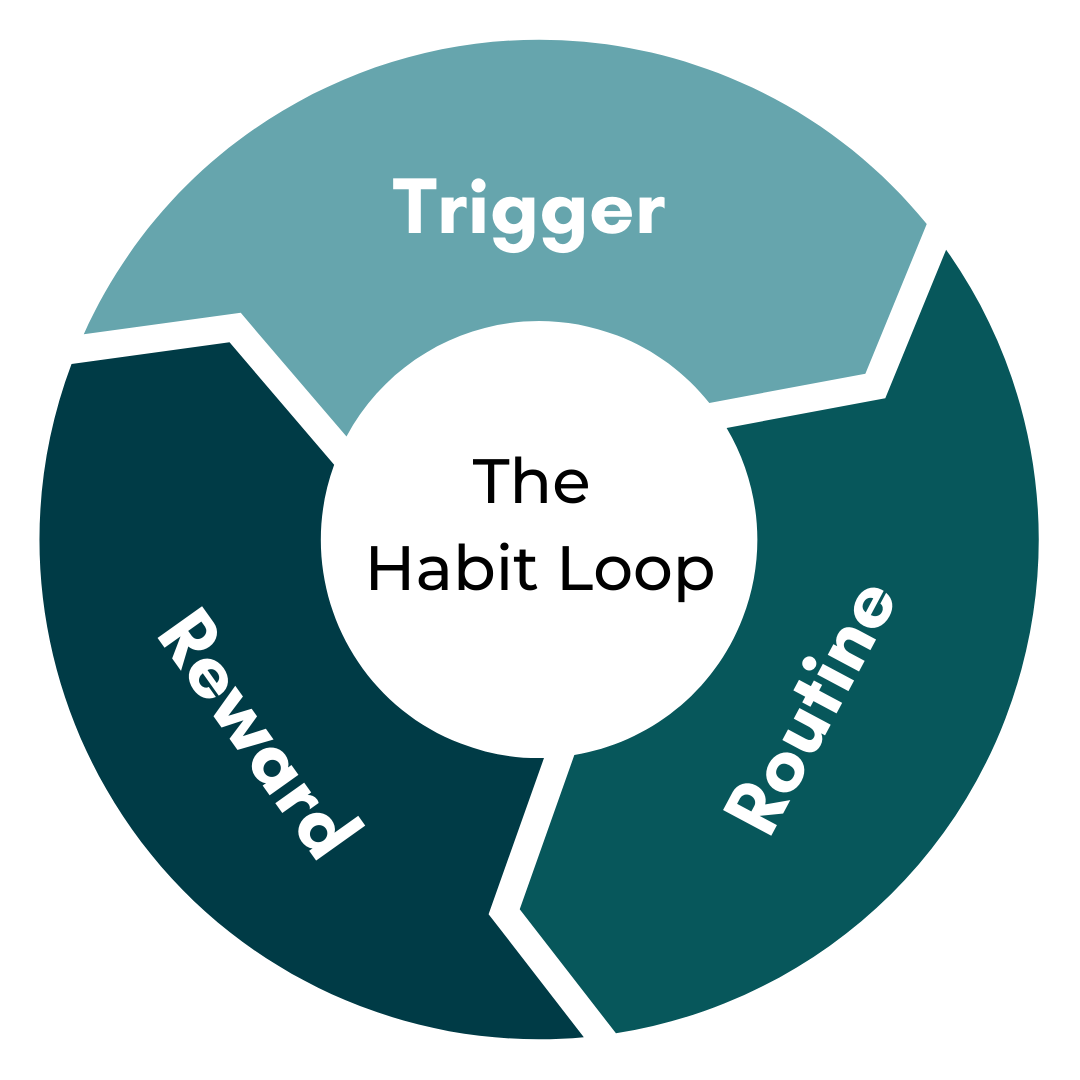
- Cue: choose a trigger to initiate/stimulate the start of the behavior you want to turn into a habit.
- Routine: execute the routine, ideally starting with a small, actionable chunk. Try to avoid starting with an overly ambitious new routine.
- Reward: do something enjoyable, which will reinforce that this particular habit loop is worth remembering for the future.
Important Note: The most common challenge is to execute the routine right after the cue.
What Principles Support Stopping Habits?
- Link an established healthy habit to the unhealthy habit to decrease the neural circuit connection of the unhealthy habit.
- Engage in an established healthy habit asap after recognizing starting and/or completing the unhealthy habit.
- Self criticism/punishment responses negatively reinforce learning and behavior change.
Proposed Questions for Thought/Sharing:
1. Is there a new habit that you developed to support your health/wellness/recovery and how did you establish that habit?
2. Is there an unhealthy habit that you successfully stopped to support your health/wellness/recovery and how did you break that habit?
Prompt for Writing or Thought This Week:
Recall a new habit that you successfully “hardwired” into your recovery lifestyle. Why did you start this habit? How did you create this habit? What challenges did you predict? What challenges were a surprise? What emotions do you recall throughout the process?
Recall an intended habit that you did not “hardwire” into your recovery lifestyle. Why did you start this habit? How did you start this habit? What challenges did you predict? What challenges were a surprise? What emotions do you recall throughout the process including deciding to and/or recognizing unsuccessful habit formation.
Identify a habit that you want to start or change. Why do you want to start or stop this habit? What activities/steps will you continue to use that were successful in the past and what activities will you change that were not successful in the past?
Disclaimer:
This summary is for general informational purposes only and does not constitute the practice of medicine or other professional health care services, including the giving of medical advice, and no doctor/patient relationship is formed.
Leave a Reply