

Most universal of mindfulness practices – awareness of breath.
The focus of breathing practice is on developing awareness.
With mindfulness training the mind becomes less scattered and distracted.
Memory, reasoning, planning, problem solving – are all positively affected by mindfulness.
Becoming mindful of our breathing can calm and steady our attention.
Improve our ability to focus on whatever we’re doing
Breath is an anchor for remaining present with your experience.
Not just a relaxation tool – it’s the central anchor for awareness.
Key roles of Breath in both attention and nervous system regulation:
First: The breath is always available. It travels with you everywhere. A reliable “home base” for attention. When the mind wanders—as it naturally does—you gently return to the sensation of breathing.
The act of returning is the core of the training: you’re strengthening the capacity to notice distraction without getting carried away by it.
Second: Breath connects directly to the body. Mindfulness isn’t about thinking differently—it’s about experiencing directly.
By noticing physical sensations of breathing you shift out of abstract thinking and into present-moment awareness.
Interrupts cycles like rumination and worry; major drivers of psychological stress.
Third: Breath reflects and influences the nervous system.
When anxious or stressed, breathing tends to become shallow and rapid. By paying attention to the breath—and allowing it to naturally slow and deepen—you engage the parasympathetic nervous system (the “rest and digest” response).
Fourth: Breath helps cultivate a particular attitude.
Not about controlling the breath but observing it with curiosity and without judgment.
If the breath is tight, uneven, or uncomfortable, that becomes part of the practice.
This builds a broader skill: the ability to stay present with difficult experiences rather than reacting automatically to them.
Finally:
Breath acts as a bridge between formal practice and daily life.
You can return to it in moments of stress—during a difficult conversation, while waiting, or when emotions spike.
Even one conscious breath can create a small pause, giving you more choice in how you respond.
The breath matters because it’s simple, immediate, and deeply tied to both awareness and regulation.
The breath becomes a training ground for attention, a doorway into the body, and a stabilizing point in the middle of stress.
Remember to be patient with yourself!
Like learning to play piano or basketball, giving a presentation, or learning any art or skill, it takes repeated practice.
So how does the Breath engage the parasympathetic nervous system?
Breath is one of few body processes that’s both automatic and under voluntary control, which makes it a direct doorway into the Autonomic Nervous System—especially its calming branch, the Parasympathetic Nervous System.
Here’s how it works:
- Vagus Nerve
Slow, steady breathing stimulates the Vagus Nerve, which is the main communication pathway of parasympathetic system. Breath is not neutral.
Inhalation slightly activates the sympathetic (“alerting”) response
Exhalation activates the parasympathetic (“calming”) response
Many mindfulness practices emphasize longer, slower exhales.
Extending the out-breath strengthens the body’s natural braking system.
2. Heart rate and breath sync up
Natural rhythm called Respiratory Sinus Arrhythmia:
Heart rate speeds up as you inhale
Heart rate slows down as you exhale
When you breathe slowly and evenly, this rhythm becomes more pronounced, increasing heart rate variability (HRV)—a marker associated with better stress resilience and parasympathetic activation.
Slow breathing shifts the whole system
When you intentionally slow your breathing it sends a signal to the brain that “things are safe.”
This reduces activity in stress-related circuits and supports regulation in areas involved in emotional control.
5. AWARENESS Matters—not just mechanics
It’s not about forcing the breath but noticing it.
Mindful attention reduces reactivity and can indirectly quiet the stress response.
You’re not just changing physiology—you’re also changing your relationship to what’s happening.
In Summary: Slow, conscious breathing—with longer exhales—activates the vagus nerve, enhances heart–breath coordination, and shifts your body into a parasympathetic state, like gently pressing the body’s internal “calm” switch rather than trying to shut stress off by force.
D.H. Lawrence: “… bodily the human race is dying. It’s like a great uprooted tree with its roots in the air. We must plant ourselves again in the universe. As we mindfully experience the actual sensations in our body, we’re planting ourselves in the universe.”
From Breath to Body Sensations
Being aware of the sensations throughout the body also serves as an anchor, a home base for connecting with what’s actually happening in the moment.
Widens the experience of mindfulness by exploring the realm of sensations in the body in a direct, non-judgmental way.
We can use this focused awareness to become mindful of our thoughts, feelings, and sensations, and of our interactions with others.
This opens us to a freedom of choice.
Every experience, whether it’s love or hurt, anger, thinking, or addictive behavior; each and every experience is fueled by physical sensations.
We’re conditioned to pull away from unpleasant sensations and try to hold on to pleasant ones. This means we’re continually reacting with grasping or pushing away.
As we learn to remain present with sensations, we not only free ourselves from old patterns of reactivity. We also receive the gifts of an embodied life.
Our minds ….can be anywhere and everywhere. Past present or future.
Our body lives in the present moment. When we’re in touch with our body, we’re here available for life.
“The church says the body is the sin. Science says the body is a machine. Advertising says the body is a business. The body says I am a fiesta.”
Eduardo Galeano
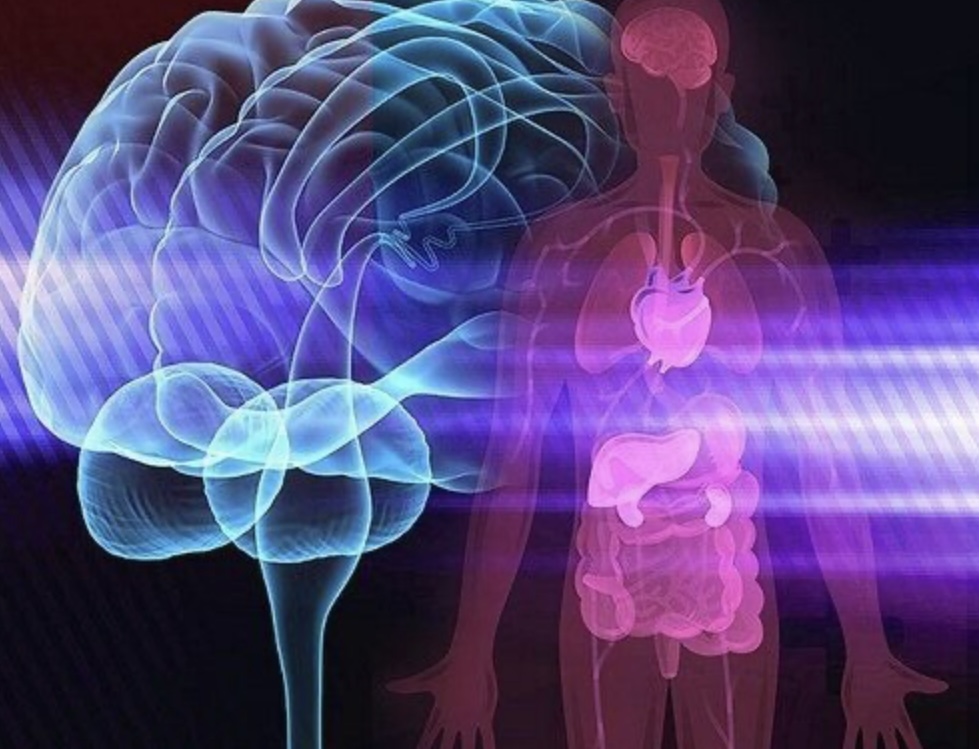
Neuroscience: the brain is connected to huge networks of neurons in the heart and the gut. We don’t think only with our head.
When we’re out of touch with a more full felt sense of our body, there are several consequences:
We’re unable to tune into the intelligence in our body that actually lets us know how to take good care of ourselves. We can’t listen to the messages that are essential for our well-being.
Mindfulness is ultimately really about cultivating compassion for ourselves and for others, an invitation to bring kindness and a friendly curiosity into our lives.
Disconnection from our body also limits our ability to sense and comprehend what’s going on in others.
“Our autonomic nervous system is tethered (unconsciously connected) to the autonomic nervous system of others.
So, mindfulness of our body is essential in being empathically connected with others.
Our attachment relationships are essential for emotional regulation.
Attachment is interactive regulation.
Attachment is not psychological, it’s neurobiological
Depending on how our nervous system ‘interprets’ a situation determines whether we numb/disconnect, dysregulate/distrust, or connect.” Our Garden, 6/27/25
Mirror neurons that enable us to be attuned to others are only activated if we have a degree of conscious connection with our own sensations and emotions.
So, mindfulness of our body is essential in being empathically connected with others.
Research: brains of advanced meditators on MRI – the part of the brain correlating with perceiving a boundary between self and others decreased substantially.
A sense of unification or connection to the whole.
Helpful way to begin awakening mindfulness is by asking the following questions:
What is happening inside me right now?
Can I be with this?
Discussion Questions:
What draws you to cultivating mindfulness in your life?
What draws you to embark on recovery or stay in recovery?
What have you discovered when paying attention to the breath?
What, if anything, surprised you?
What, if anything, do you find challenging in this practice?
Leave a Reply