
Kratom
Brief report
Current Kratom use and pharmacology
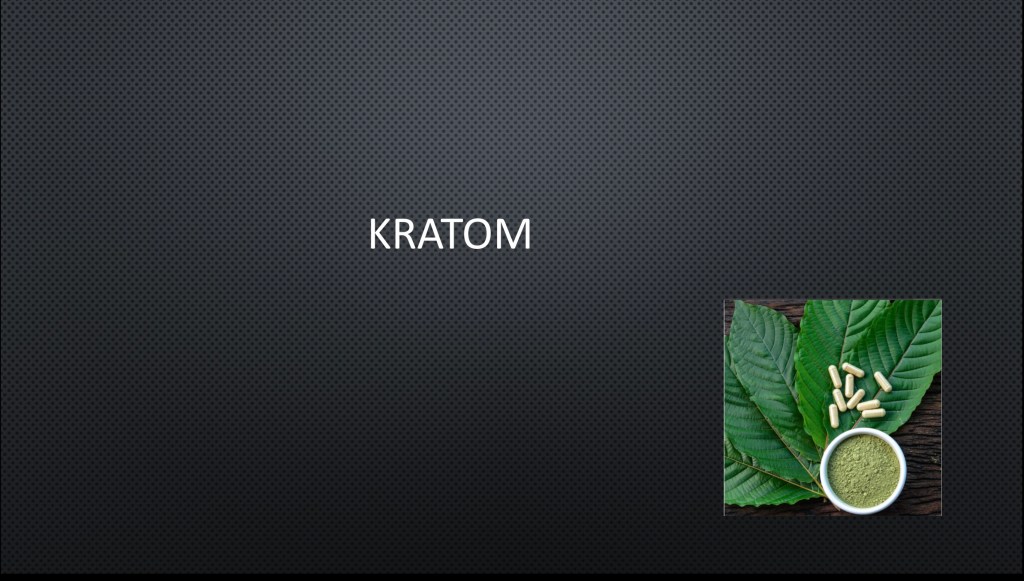
I have recently noticed signs outside of vape shops, roadside convenience stores and gas stations for something I had not seen before, Kratom sold here. Not knowing anything about it I looked around for information. The following is a brief report of I have found out about this substance.
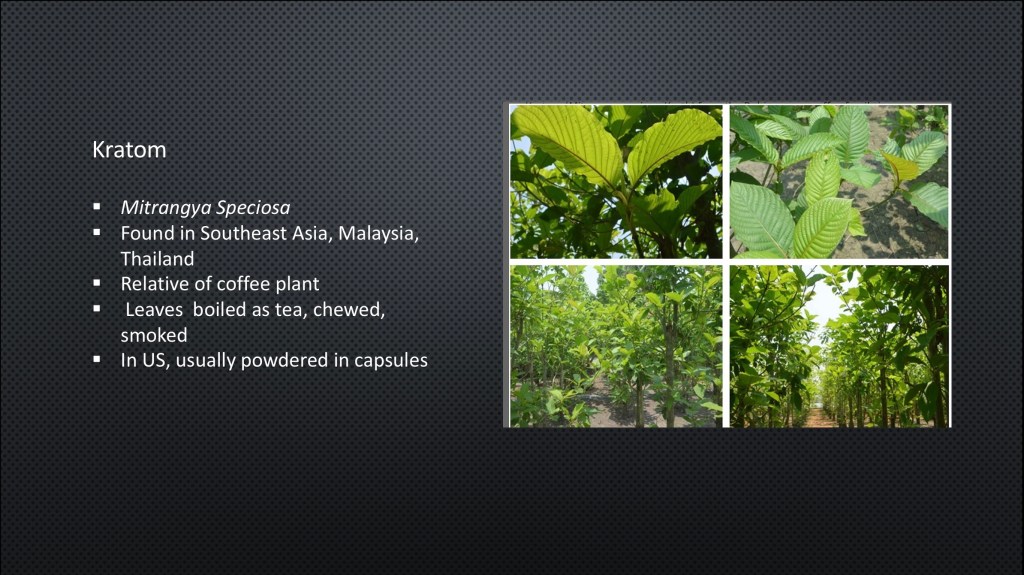
Kratom refers to the leaves of the plant Mitrangia Speciosa a relative of the coffee family. The plant grows throughout Southeast Asia and is cultivated primarily in Thailand, Malaysia, and Myanmar.
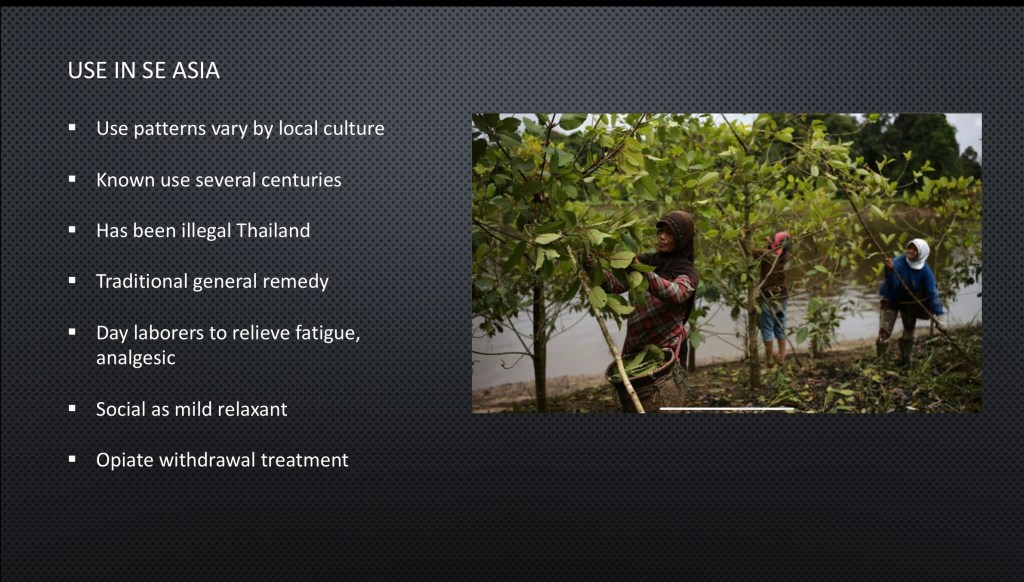
Recorded use of the plant by people in the region goes back several centuries. In some areas it has been used primarily by day laborers as a mild stimulant and analgesic to get through the workday. Most often consumed as chewed leaves or a tea. It has also been kept as a general remedy for fevers and pain relief.
Where opiate use is prevelant Kratom has also been used to counteract withdrawal symptoms.
In Thailand it is currently decriminalized having been declared illegal for several decades.
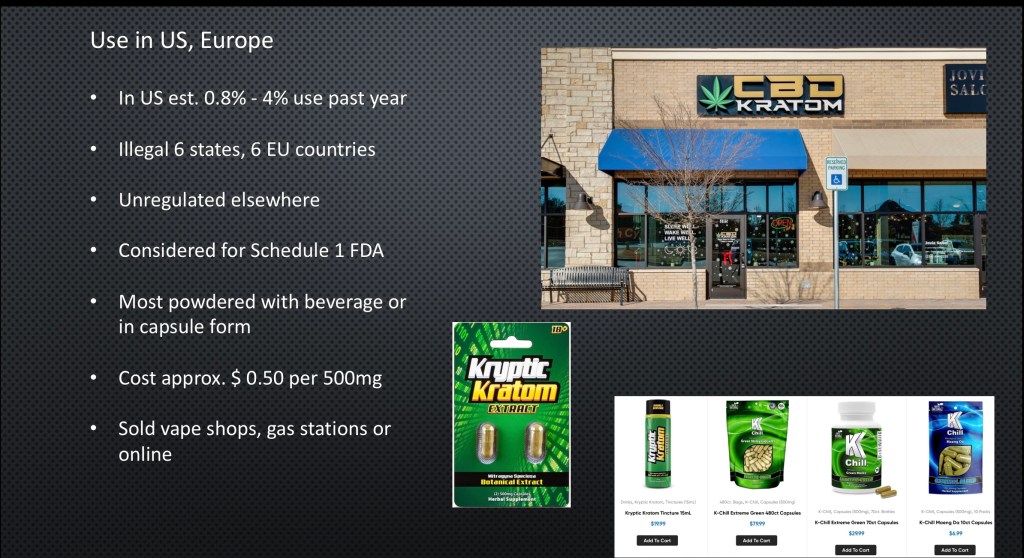
In the US and Europe Kratom is illegal in six US states and in 6 EU countries. Elsewhere in the US it is unregulated. The FDA has considered it for category 1 status which would place Kratom in the same status as heroin. Thus far the FDA has not acted on the proposal.
There is limited information on the use of kratom and lack of controlled studies documenting effects.
It is sold primarily as powdered dried leaves either in bulk or in gelatin capsules. Each capsule is approximately 500mg and sells for roughly 50 cents each. User doses range from about 2-8 grams per use. Because the product is unregulated usage data is limited.
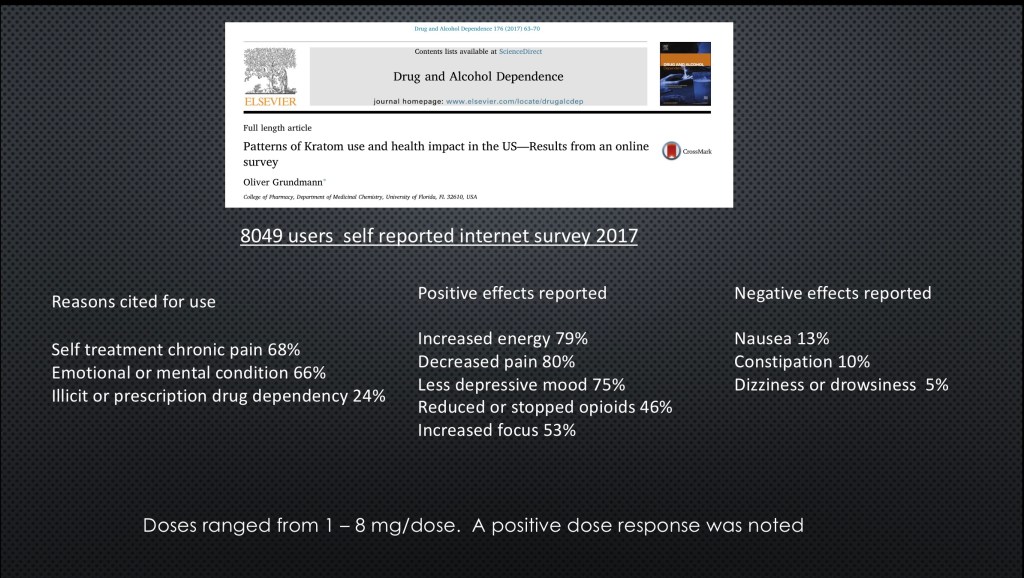
This study looked at a self reported survey of 8049 individuals recruited for an online survey. Volunteers answered questions about reasons for Kratom use and positive or negative effects experienced.
The most common responses are listed above.
The responses indicate that most people used Kratom for relief of chronic pain, emotional or mental condition or symptoms related to drug dependency. Most users experienced positive results with lower reported negative effects.
A positive dose response was noted with increased positive and negative effects at higher doses. The study was significantly limited due to self reporting bias, recruiting selection bias (internet solicitation on kratom related websites) and lack of placebo control.
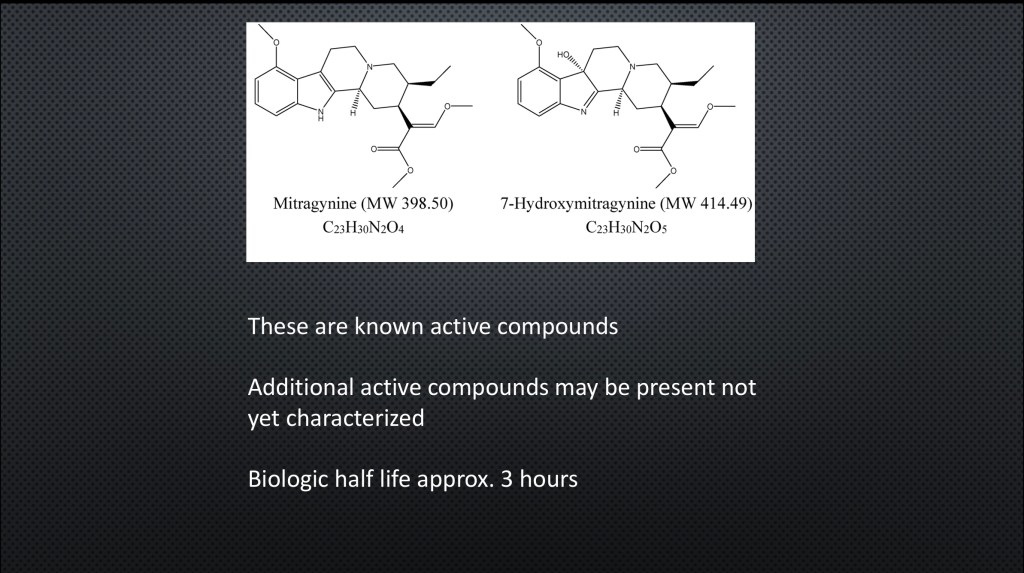
Two biologically active compounds in the Kratom leaf have been identified. Of these Mitragynine is in greater concentration and is thought to be less active than the hydroxylated form. Because there are many additional phytochemicals present which have not been studied the overall pharmacology is incompletely understood.
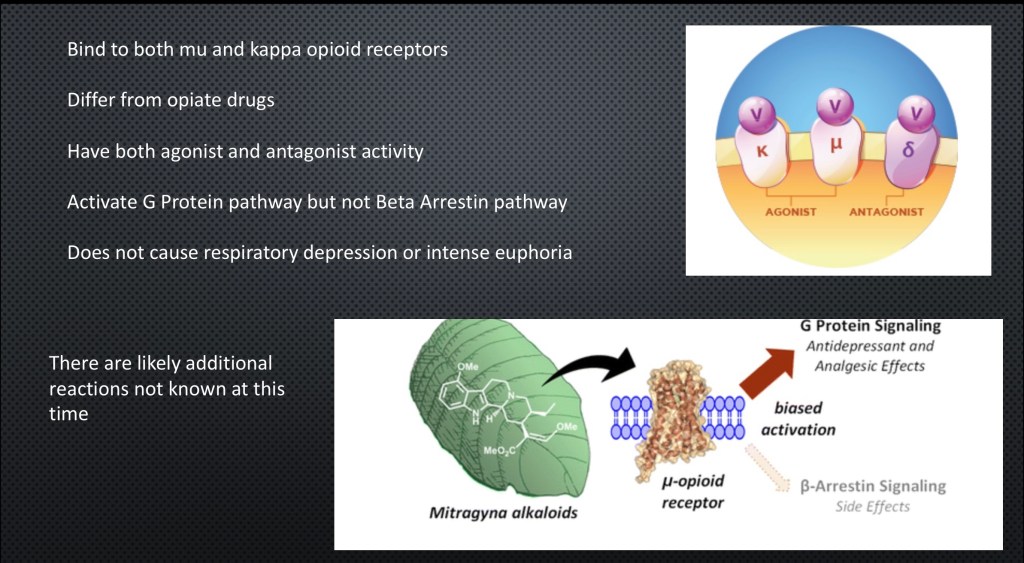
Mitragynine acts on the endogenous opioid system. It has been shown to bind to mu and kappa opioid receptors. It does not act in the same way as classical opiates such as morphine or endorphins.
This explains analgesic and mood enhancing effects of Kratom without the respiratory depression seen with opiate drugs like fentanyl.
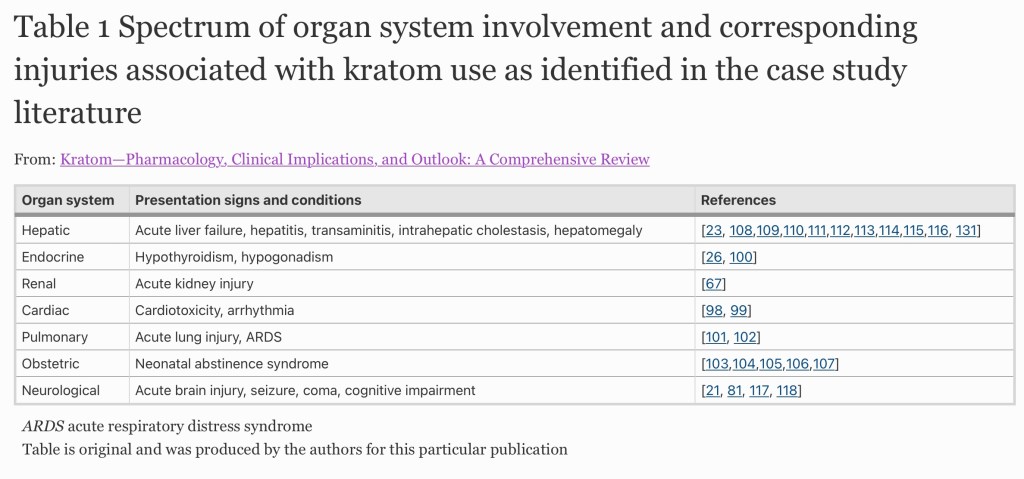
Overdose and organ system damage have been reported with Kratom use. These are based on case reports and include possible overdose death. Liver, kidney, and neurological complications have been reported. At this time possible drug interactions and toxicity have not been conclusively investigated.
The NIDA has acknowledged that “Compared to deaths from other drugs, a very small number of deaths have been linked to kratom products and nearly all cases involved other drugs or contaminants.”.
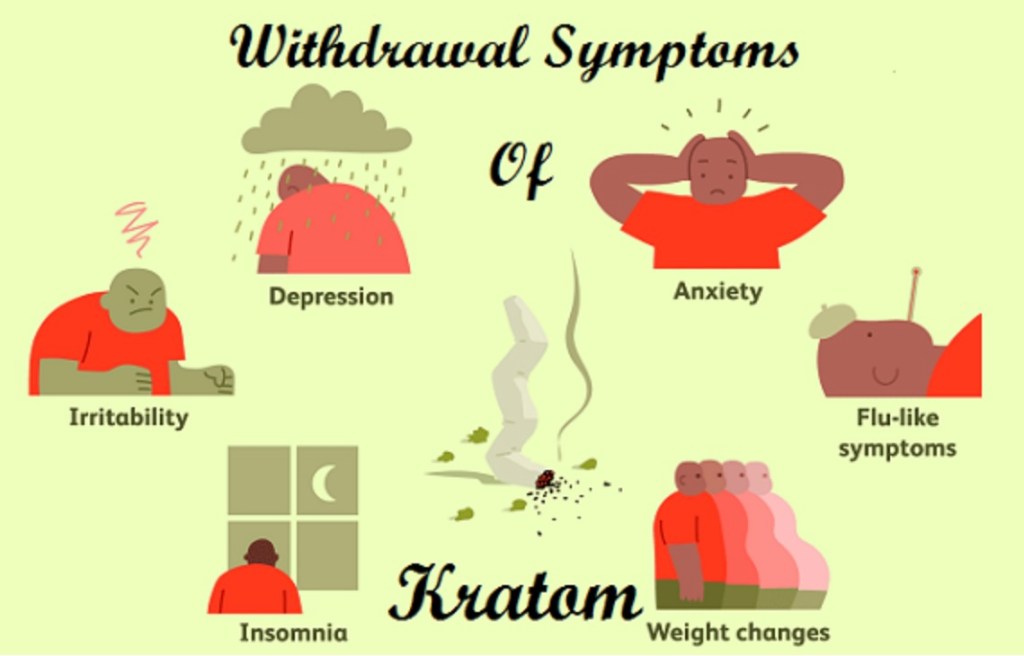
Physical dependence and withdrawal symptoms from Kratom may occur. Users generally describe withdrawal as similar to opiates but of shorter duration and less intensity.
What I have found about this substance is there are more questions than answers. There is simply not enough information to make an informed evaluation At this time research efforts are underway supported by NIDA and other institutions to evaluate potential medical uses for Kratom and its derivatives.
REFERENCES
NIDA – Kratom fact sheet
https://nida.nih.gov/research-topics/kratom
…………………..
Kratom
………………………….
Kratom—Pharmacology, Clinical Implications, and Outlook: A Comprehensive Review
- Steven C. Eastlack, Elyse M. Cornett & Alan D. Kaye
Pain and Therapy 9 55–69 (2020)
https://link.springer.com/article/10.1007/s40122-020-00151-x
………………………………
Am J Prev Med. 2021 August ; 61(2): 240–245. doi:10.1016/j.amepre.2021.02.004.
Past-Year Kratom Use in the U.S.: Estimates From a Nationally Representative Sample
Joseph J. Palamar, PhD, MPH
……………………………………
Addiction. 2008 June ; 103(6): 1048–1050. doi:10.1111/j.1360-0443.2008.02209.x.
Self-treatment of opioid withdrawal using kratom (Mitragynia speciosa korth)
Edward W. Boyer1, Kavita M. Babu1, Jessica E. Adkins2, Christopher R. McCurdy2,3,
……………………………………..
Health Effects Associated With Kratom (Mitragyna speciosa) and Polysubstance Use: A Narrative Review
Catherine W Striley https://orcid.org/0000-0003-2973-7842 cstriley@ufl.edu, Carolin C Hoeflich https://orcid.org/0000-0002-1741-9671, […], and Christopher R McCurdy
https://doi.org/10.1177/11782218221095873
…………………………………………
J Cardiovasc Pharmacol. 2017 September ; 70(3): 142–158. doi:10.1097/FJC.
GPCR signaling via β-arrestin-dependent mechanisms
Pierre-Yves Jean-Charles1, Suneet Kaur1, and Sudha K. Shenoy1,2,**
………………………………………
Simulated Side Effects: FDA Uses Novel Computer Model to Guide Kratom Policy
February 8, 2018 Mason Marks Bioethics, Clinical Research, FDA, Health Law Policy, Mason Marks, Medical Safety, Mental Health, Pain, Pharmaceuticals, Public Health, Scientific Evidence
………………………………………
$11 million awarded to family of woman who died after taking kratom, an opioid-like herb
………………………………………………
Changing trends in the use of kratom (Mitragyna speciosa) in Southeast Asia
Darshan Singh, Suresh Narayanan, Balasingam Vicknasingam, Ornella Corazza, Rita Santacroce, Andres Roman-Urrestarazu
First published: 24 May 2017 https://doi.org/10.1002/hup.2582
Human Psychopharmacology:
https://onlinelibrary.wiley.com/doi/full/10.1002/hup.2582
……………………………………………
Treatment of Kratom Withdrawal and Dependence With Buprenorphine/Naloxone: A Case Series and Systematic Literature Review
Weiss, Stephanie T. MD, PhD; Douglas, Heather E. MD
Journal of Addiction Medicine 15(2):p 167-172, March/April 2021. |
………………………………………………..
Am J Prev Med. 2021 August ; 61(2): 240–245. doi:10.1016/j.amepre.2021.02.004.
Past-Year Kratom Use in the U.S.: Estimates From a Nationally Representative Sample
Joseph J. Palamar, PhD, MPH
Department of Population Health, New York University Grossman School of Medicine
…………………………………………………….
Patterns of Kratom use and health impact in the US—Results from an online survey
Oliver Grundmann⁎
College of Pharmacy, Department of Medicinal Chemistry, University of Florida, FL 32610, USA
Drug and Alcohol Dependence 176 (2017) 63–70
……………………………………………
For information and educational purposes only. No commercial or institutional interests. Data and images obtained from sources freely available on the World Wide Web. This post should not be considered medical or professional advice.

 Sober Synthesis
Leave a reply to Patrick Meowler Cancel reply