
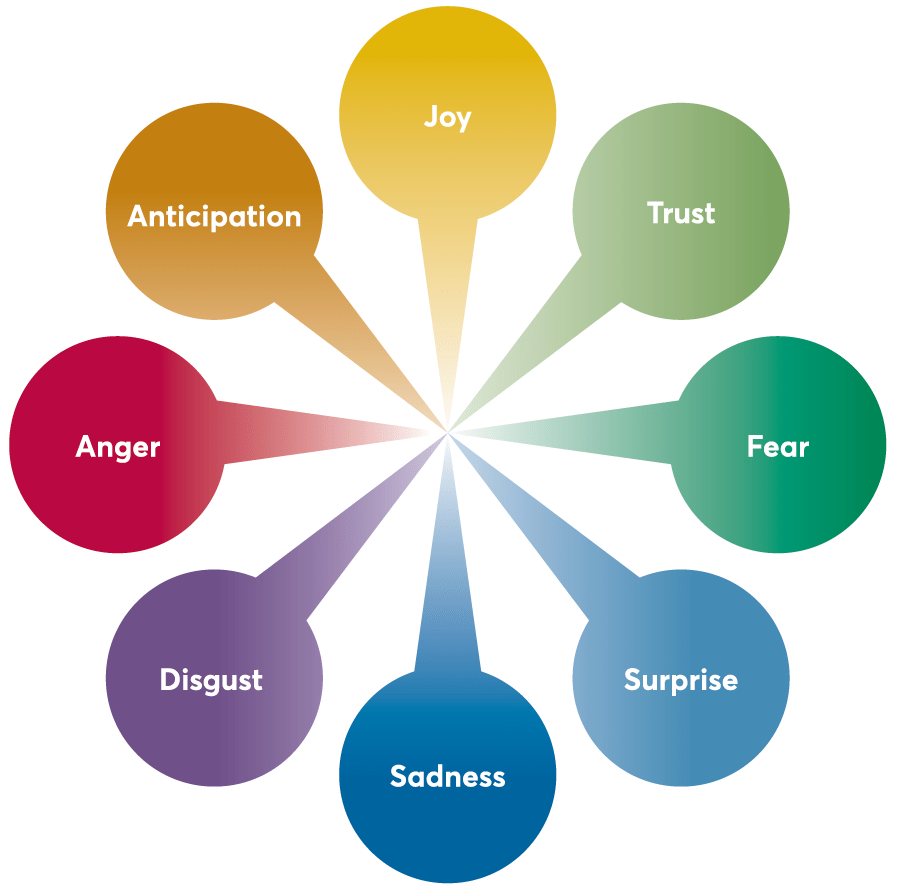
How Does Early Recovery Impact Our Emotions?
- During early recovery, emotional lability/instability is common while our bodies are healing. Self-care, self-compassion, and social support are essential.
- It is also common to have difficulty identifying/describing our emotions during early recovery, especially if our “emotional intelligence” was limited prior to abstinence.
What is the Difference Between Feelings and Emotions?
- Our brain keeps the score, our body is the scorecard – we don’t feel things in your brain, we feel them in our body.
- Feelings and emotions are not interchangeable words; when we create/identify an emotion, we’re giving meaning to the affective feelings.
- Affect is your basic sense of feeling, ranging from unpleasant to pleasant (called valence), and from idle to activated (called arousal).
- Our emotions can be understood and tracked using a three dimensional model:
- Level of arousal (excited/anxious to calm/relaxed)
- Valence (pleasure to displeasure)
- Level of internal (interoceptive) to external (exteroceptive) focus

- We have two primary emotional systems.
- Our autopilot system, used about 70% of the time, developed early in our evolution (based primarily in our amygdala). This subconscious system guides our habits, makes quick intuitive decisions, and immediately responds to dangerous situations.
- Our intentional system evolved using our prefrontal cortex. This system evolved to help us make predictions, learn new information, and develop an understanding of self in relation to social networks. Our intentional cognitive system takes significantly more work/energy. Thus, the importance of healthy sleep, eating, and exercise.
- Managing arousal is essential to engage our intentional emotional system. When highly aroused our autopilot (instinctual) emotional system dominates our emotional responses.
What Activities Promote Emotional Balance and Growth?
- Using a guide (emotion wheels are helpful) to identify and understand emotional nuances.

- Many people benefit from regular monitoring/feedback. This application, as well as others, may be helpful. MOOD METER APP
- Activities to modulate emotions focused on external experiences
- Meditation/mindfulness with focus on internal senses (breathing, touch, muscle relaxation).
- Engage in a gratitude practice focused on internal .thankfulness/strength (memory of receiving gratitude).
- Engage in movement and/or exercise with focus on internal senses.
- Activities to modulate emotions focused on internal experiences
- Meditation/mindfulness with focus on external senses (sounds, visual images, colors, textures, tastes)
- Use second and third person talk (use he, she, it, your name) instead of I, me. This activates different brain pathways that provide more psychological distance with less brain effort.
- Engage in a gratitude practice focused on external thankfulness (remember a story of gratitude that inspired you).
- Engage in movement and/or exercise with focus on external senses
- Engage in Narrative Expressive Journaling (create a story)
- Group and/or individual therapy is often helpful, especially to process trauma.
Proposed questions for thought/sharing:
1. What activities have helped you improve your emotional growth and how have those changes supported your recovery/wellness?
2. What are your emotional challenges? Any ideas for the future?
Disclaimer:
This summary is for general informational purposes only and does not constitute the practice of medicine or other professional health care services, including the giving of medical advice, and no doctor/patient relationship is formed.
 Sober Synthesis
Leave a comment