
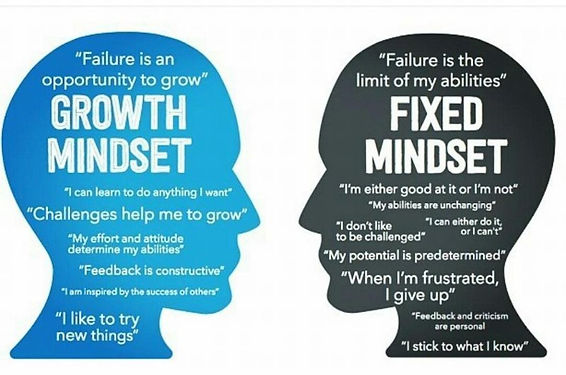

What are Mindsets and Why are They Important?
- Mindsets are core beliefs or assumptions we have about a domain or category of things that orient us to expectations, explanations, and goals – they come from our upbringing, culture & media, influential people in life and our conscious choices.
- “Mindsets are a portal between conscious and subconscious processes – they operate as a default setting of the mind.” – Dr. Alia Crum
- Mindset shapes physiological mechanisms by changing what our bodies prioritize and are prepared to do.
- Powerful Study: participants were given an identical milkshake at two separate time points – the first time they were told the milkshake was healthy and full of good nutrients; the second time, they were told the milkshake was an indulgent, high-calorie treat
- Results: when people thought they were consuming the high fat, high-calorie milkshake, ghrelin (hunger hormone) levels dropped 3x more – when participants believed the food was high calorie and indulgent, their bodies believed they were fuller and satiated
- If you view a stressor as more of a challenge and less of a threat, brain and body response is more adaptive
- People who view stress as an opportunity for growth, experience better health outcomes, better well-being, higher performance
- Benefits of embracing stress as enhancing mindset: shifts focus to understanding why something is going wrong and allocating resources accordingly, physiological processes shift (shorter duration of cortisol, increased stroke volume), takes brain and body away from negative state and toward the positive state, improves the ability to deal with future stressors
- In 2012, researchers from the University of Wisconsin-Madison published a seminal study looking at how 28,000 people perceived stress in their lives. People in the study answered these two questions:
During the past 12 months, would you say that you experienced:
1. A lot of stress
2. A moderate amount of stress
3. Relatively little stress
4. Almost no stress at all
How much effect has stress had on your health?
1. A lot
2. Some
3. Hardly any
4. None
The researchers looked at death rates in the study group over nine years. The study found that having a lot of stress in your life was not linked with premature death. But having a lot of stress in your life and believing it was taking a toll on your health increased the risk of premature death by 43%.
What is a Growth Mindset?
- A growth mindset reinforces the fact that our abilities are malleable. Our brains can learn and change (neuroplasticity) in order to achieve emotional and behavioral growth.
- Key feature: attach our motivation to the effort itself instead of the outcome.
How to Transform a Fixed Mindset to a Growth Mindset?
- Focus on the journey rather than the destination.
- Incorporate “yet.” If you’re struggling with a task, remind yourself that you just haven’t mastered it “yet.” Integrating this word into your vocabulary signals that you can work through barriers/obstacles.
- Pay attention to your words and thoughts. Replace limitation thoughts with progress ones to build a growth mindset. Note: many of these limitation thoughts are unconscious/habit.
- Suggestion: Identify 1 word or phrase that undermines your growth mindset.
- A mindfulness activity may bring to awareness a fixed mindset word or phrase to change into a growth mindset word or phrase.
- Engage a trusted friend or relative to help you recognize when you state a fixed mindset word or phrase.
- Take on challenges. Making mistakes is one of the best ways to learn.
What Mindset Is and Why It Matters (verywellmind.com)
Proposed Questions for thought/sharing:
- Have you changed from a fixed mindset to a growth mindset in your recovery. What was that change? How did that mindset change impact your recovery/health and wellness?
- Can you identify a word or phrase that you can change to promote a growth mindset?
Disclaimer:
This summary is for general informational purposes only and does not constitute the practice of medicine or other professional health care services, including the giving of medical advice, and no doctor/patient relationship is formed.
 Sober Synthesis
Leave a comment