

A blog about addiction, neuroscience, and recovery related topics
Essentials of Neurobiology
An appreciation for the biology of the central nervous system is essential to understand processes underlying the pathophysiology of substance use disorder. This section focuses on a review of cell structure, function, neuroanatomy, and major neurotransmitters.
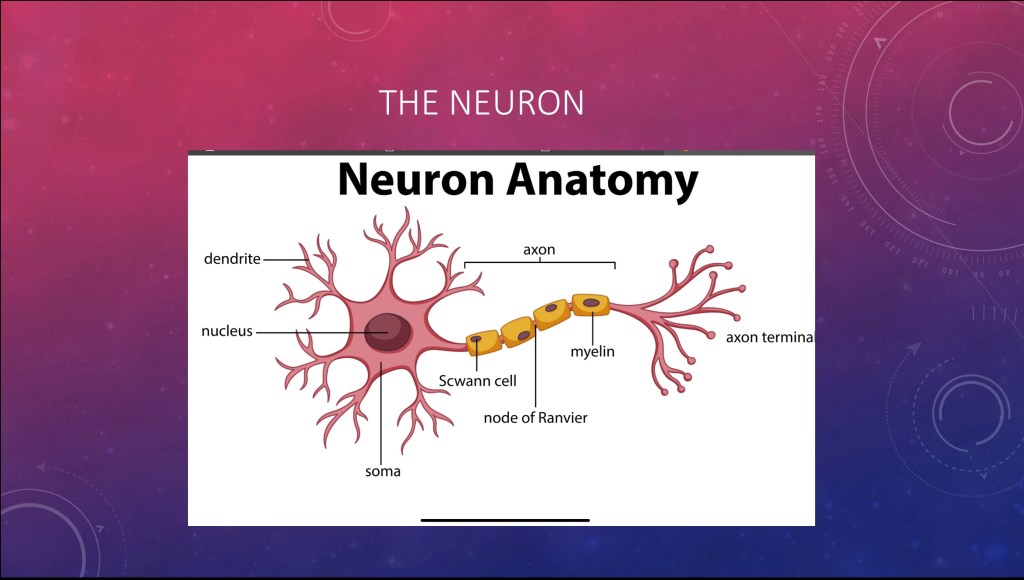
Neurons consist of a cell body containing a nucleus. Within the nucleus is DNA and neurons have the ability to manufacture proteins and other molecular components, metabolism, growth, and repair.
From the cell body extend a variable number of dendrites communicating with adjacent neurons. These are not fixed and dendrites can be gained or lost over time.
Projecting from the cell body is the axon. This carries the action potential from one location to another. Axons may be myelinated or unmyelinated. White matter consists of myelinated neurons. Grey matter consists of unmyelinated neurons.
Axon terminals are where neurotransmitters are released into the synapse in response to an action potential.
There are an estimated 2 trillion neurons in the human brain and an estimated 1 thousand trillion synapses.
Also within the brain are glial cells. These do not carry action potentials and function in metabolic support and immune response.
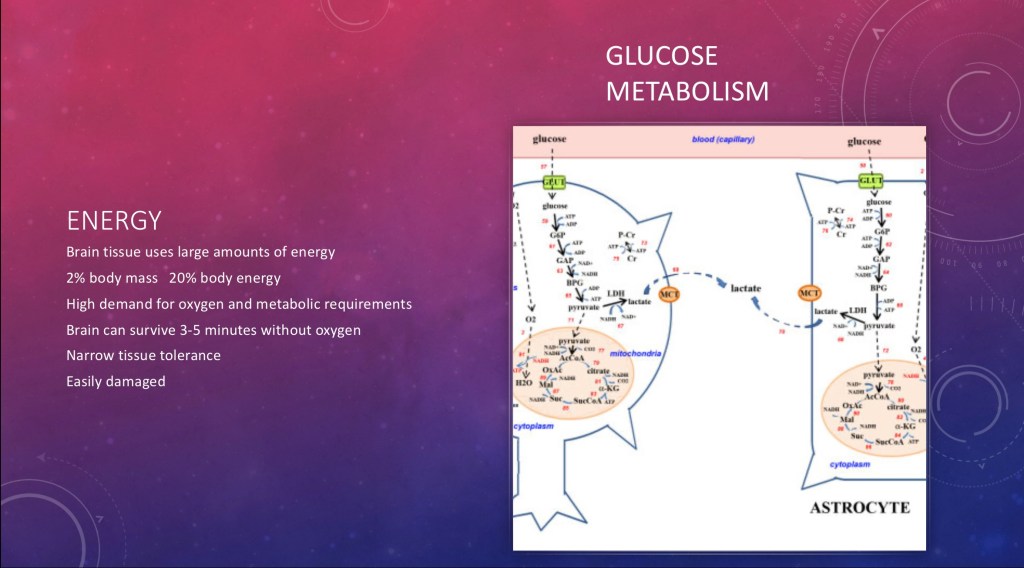
The brain has a high metabolic demand. This diagram represents the glucose pathway in neurons and astrocytes. The brain consumes 20% of body energy.
The brain has a high oxygen requirement. Brain tissue can only survive for 3-5 minutes without oxygen. Unlike many other tissues the brain cannot regenerate new neurons. Beyond a certain point damage is permanent. However because it is so dynamic remaining viable tissue can undergo neuroplastic change and take over functions to compensate for tissue loss in many cases.
In general the brain has low tissue tolerance to metabolic stress or mechanical injury.
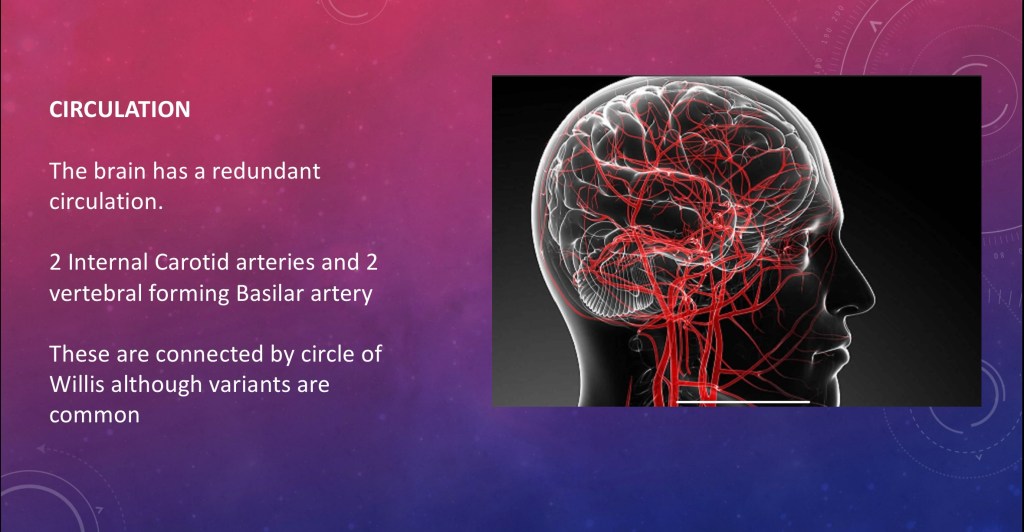
Vascular supply to the brain is by the two internal carotid arteries and the two vertebral arteries which fuse to form the basilar artery. These connect by communicating arteries to form the circle of Willis so loss of one feeding vessel should be compensated by the remaining circulation. Variants in arterial circulation are common however and communication is not always present.
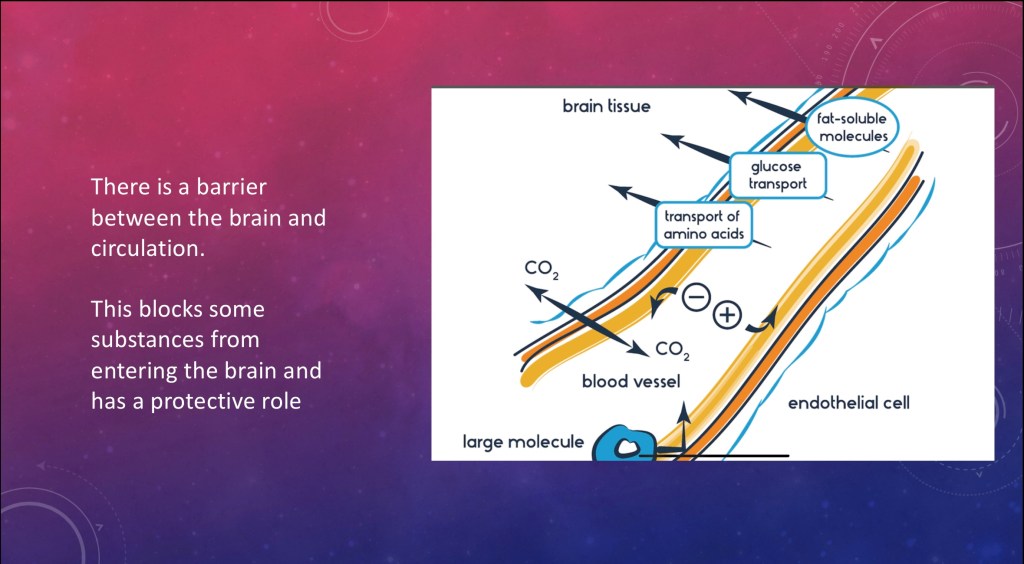
Blood brain barrier prevents or restricts some molecules from crossing into the brain. This may be an issue with some therapeutic agents and agents used for PET studies. . Dopamine for example does not cross however its precursor l-dopa does. Contrast agents used clinically for CT and MRI do not cross in normal tissue.
The barrier consists of endothelial cells and surrounding astrocytes with tight junctions between them.
Some molecules such as glucose pass through to the brain by active transport mechanisms. Alcohol diffuses rapidly into the brain.
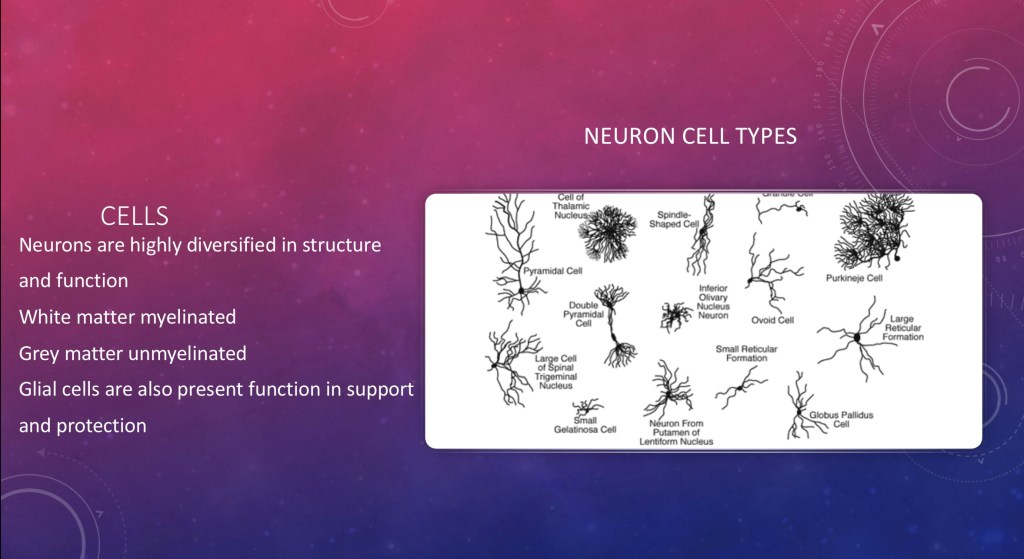
Neurons are highly specific in form and function. The types of neurons present in a particular location, transmitters and receptors present, and the local chemical environment determines what may occur in specific circumstances.
Medium spiny neurons in the striatum and nucleus accumbens have been shown to have a significant role in the reward pathway. These are inter neurons and modulate transmission from one location to another. Medium Spiny Neurons have receptors sensitive to dopamine and glutamate as well as the inhibitory transmitter GABA. They can play a role in motivation, reward, reinforcement and motor movement.
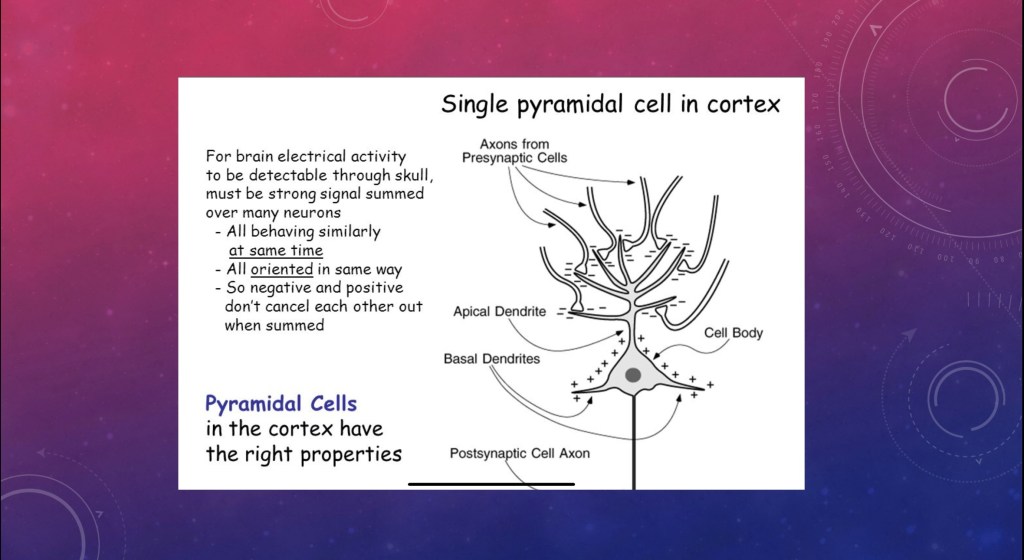
This is a pyramidal neuron in the cerebral cortex. The structure and function of these cells allows for coordinated activity with multiple cells firing together. This creates strong signals and neuroadaptive changes important in learning, comprehension, and cognition.
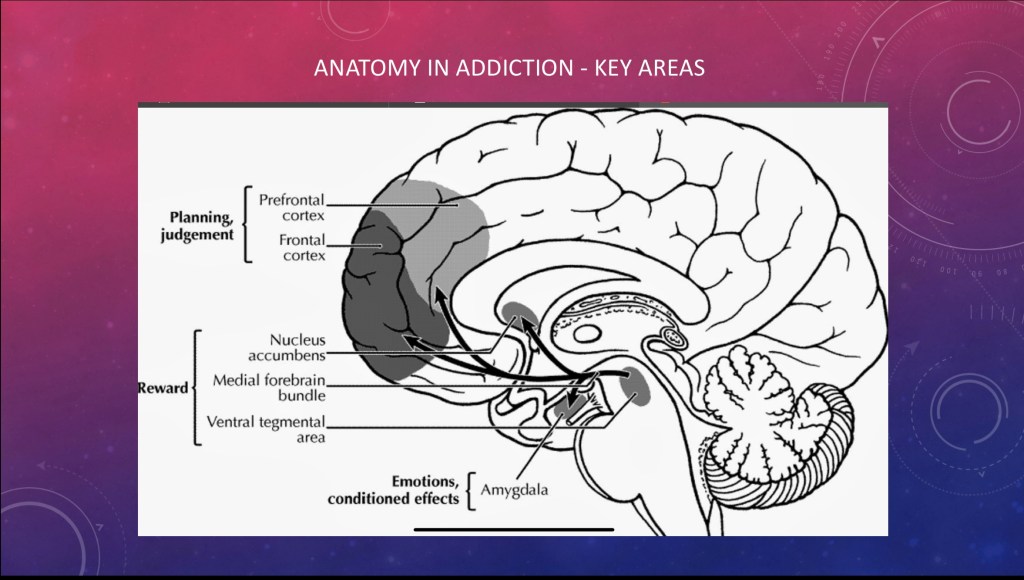
Anatomy is key in understanding brain function. In addiction the following structures are important:
- Ventral Tegmental Area. This is a small structure in the midbrain. Dopamine neurons fire from here in response to rewarding stimuli. These project to the nucleus accumbens.
- Nucleus accumbens. Small area which acts like the central switchboard in reward and other pathways. Multiple projections to other brain areas project in and out of here.
- Amyglyla. Central in regulation of emotion and stress reaction.
- Frontal Cortex. The thinking part of the brain. Executive function, salience, and decision making.
SYNAPSE
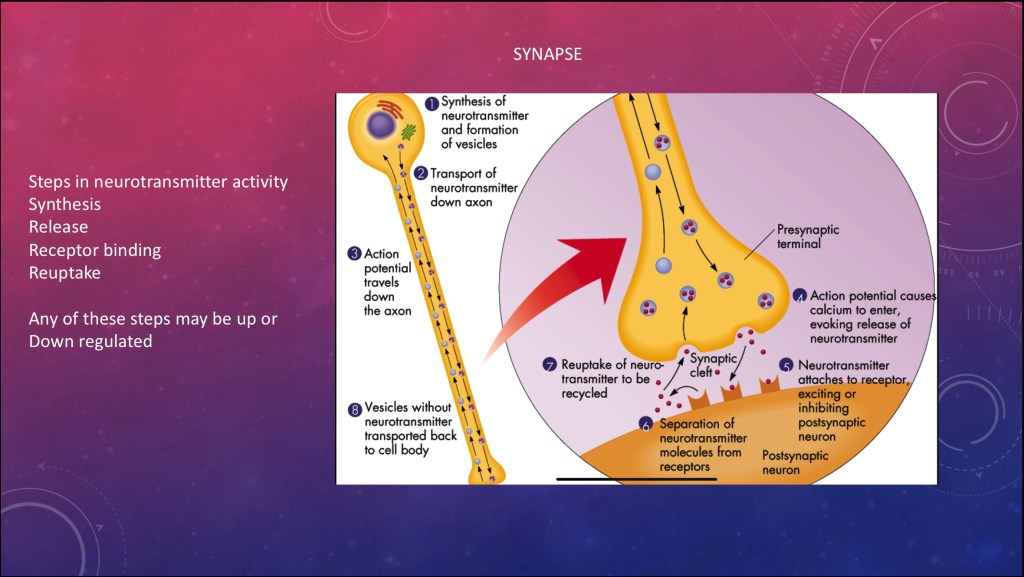
Summary of neurotransmitter activity at the synapse.
- Neurotransmitter is synthesized in the cell
- When an action potential arrives it triggers transmitter release
- Transmitter binds to receptor at the receiving neuron.
- Transmitter is released and reuptake occurs.
Any one of these steps can be up or down regulated by neuroplastic changes or by pharmacological action. For example naloxone, used to treat opioid overdose is an antagonist, it blocks opioid receptors and prevents opioid drugs from attaching to the receptor. Cocaine blocks the dopamine reuptake transporter, this increases synaptic dopamine concentration. Amphetamines directly stimulate neurotransmitter synthesis and release.
Metabotropic receptors act by chemical reactions in the receiving cell. Inotropic receptors act by direct ion transfer.
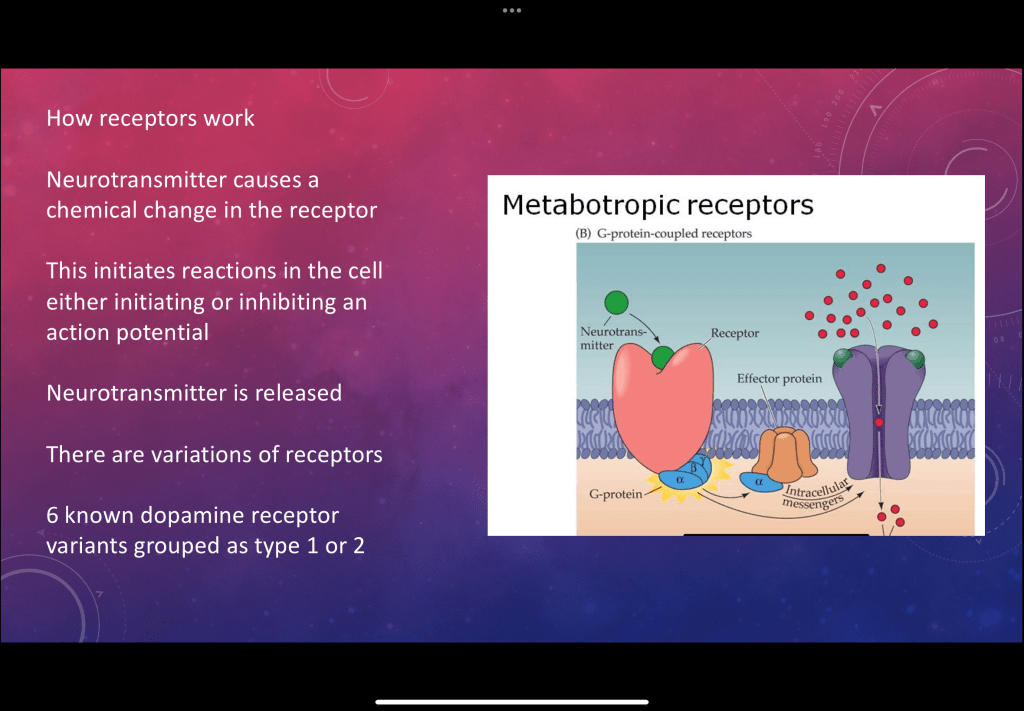
In pink is an illustration of a metabotropic receptor. Dopamine receptors are metabotropic. The neurotransmitter binds to the receptor like a key fitting in a lock. This causes a structural change in the receptor. A chain of chemical reactions takes place resulting in opening of ion channels and initiation of an action potential. This is a G-protein coupled receptor.
Serotonin and GABA work by inotropic receptors.
The neurotransmitter is then released to be taken up by a transporter and recycled.
ACTION POTENTIALS
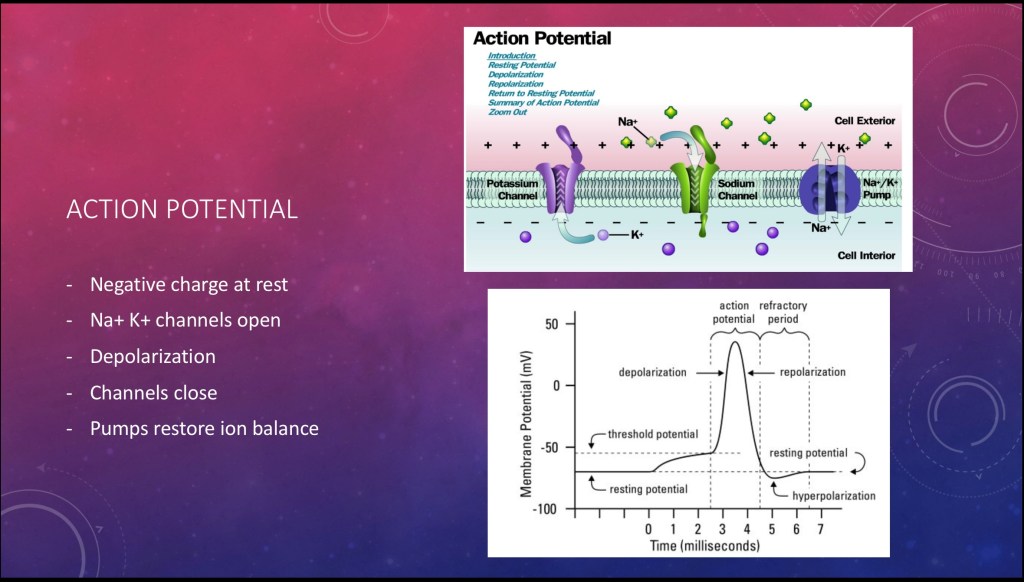
The action potential is an electric current driven by ions moving down the neural axon.
- At rest there is a net negative charge across the cell membrane due to different concentrations of sodium Na+ and potassium K+. The resting potential.
- Ion channels open and Na+ rushes in while K+ moves out. The result is a positive charge.
- The cell depolarizes resulting in a positive spike in voltage. The action potential.
- Ion channels close. Pumps restore the ion balance
- The negative resting voltage is restored
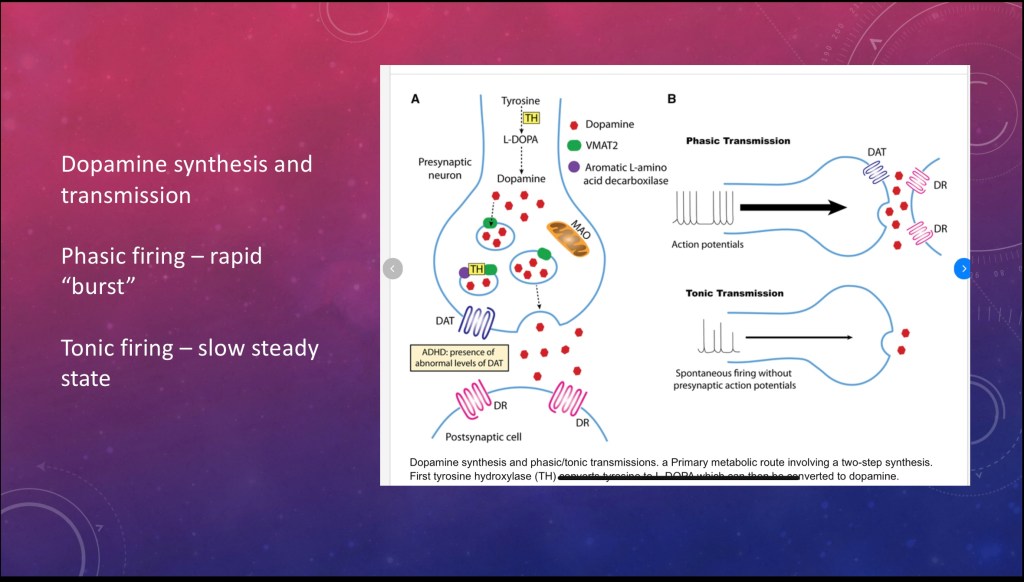
Phasic transmission releases transmitter in short bursts.
Tonic transmission releases a low baseline level of neurotransmitter. This may not be accompanied by an action potential.
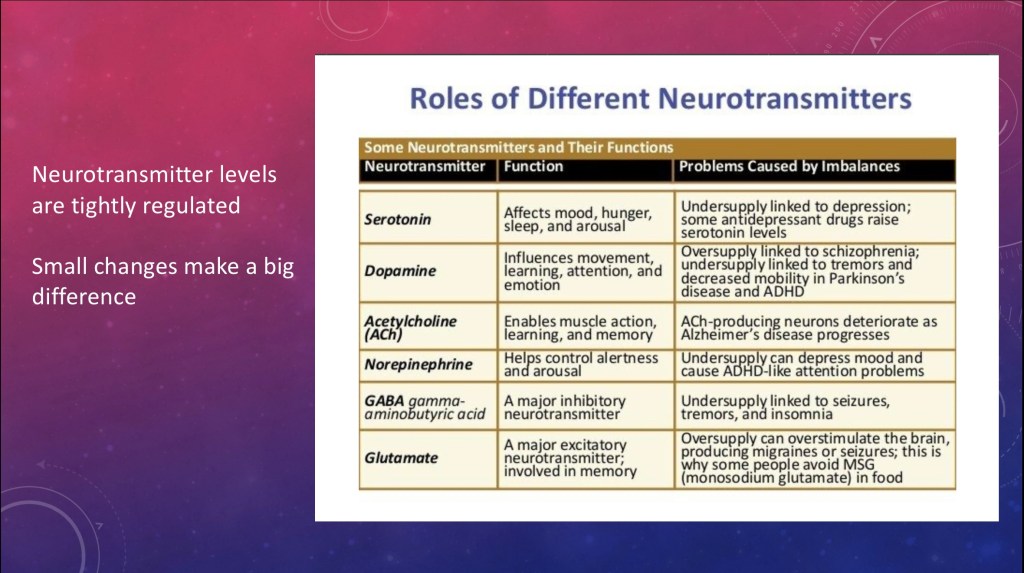
This table lists some of the common neurotransmitters, their functions, and some pathological conditions resulting from abnormal levels. Neurotransmitters are tightly regulated with small tolerance levels for variation in concentration.
Glutamate is the most common neurotransmitter. Over 90% of synapses are glutamate. They are located throughout the brain. It is excitatory and there are both metabotropic and inotropic glutamate receptors. Glutamate is an amino acid present in many proteins. It is a nonessential amino acid, meaning the body can synthesize it and it does not need to be consumed by diet. Glutamate projections from the frontal lobe play an important role in addiction.
GABA gamma aminobutyric acid is a common inhibitory neurotransmitter. Technically it is an amino acid although it is not found in proteins. Drugs acting on GABA pathways include benzodiazepines, barbiturates, alcohol (ethanol), and the anesthetic propofol. The common drug Gabapentin is a GABA analogue.
Dopamine is the primary neurotransmitter of the reward pathway. In addition to reward it is important in motor control, motivation, and emotion. It is derived from the amino acid tyrosine. Norepinephrine and epinephrine are derived from dopamine. The synthesis pathway is tyrosine—->l-dopa—->dopamine—->norepinephrine—->epinephrine.
Serotonin (5-HT) is derived from the amino acid tryptophan. Melatonin is derived from serotonin. Like dopamine serotonin is both a hormone and a neurotransmitter. In the brain it is involved in sensorimotor function, mood, sleep, memory, and pain perception.
Acetylcholine is found throughout the body. It is important in the peripheral nervous system. It acts to cause muscle contraction. It is the primary neurotransmitter of the parasympathetic nervous system. In the brain it modulates systems involved in memory, motivation, and arousal.
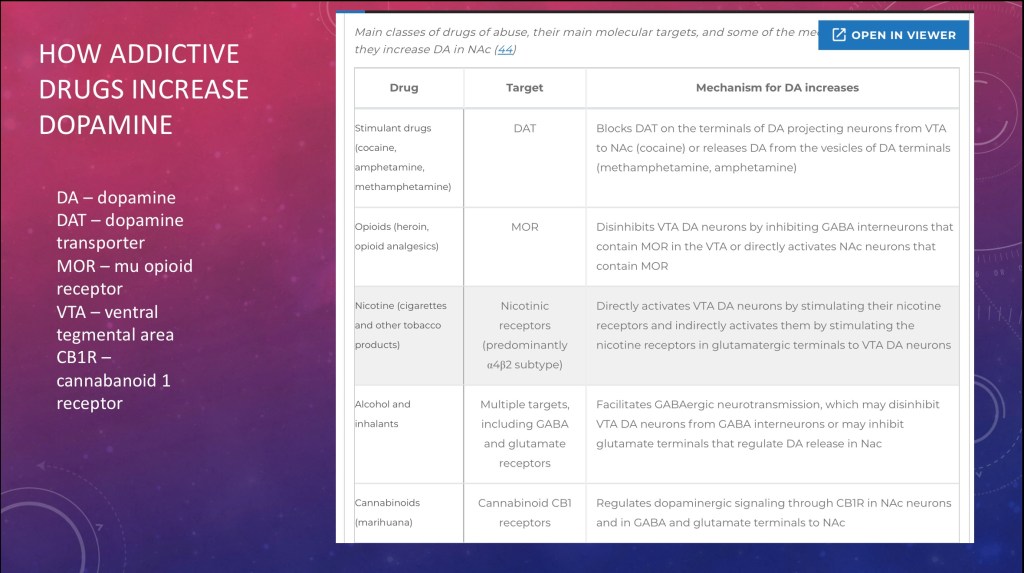
Addictive drugs each have different mechanisms of action. One thing they have in common is they act on the dopamine pathway although by different mechanisms of action.
All of them result in dysregulation as the dopamine driven reward system is over stimulated resulting in compensatory neuroplastic changes in an attempt to maintain homeostatic balance.
REFERENCES
Minireview
Unmanageable Motivation in Addiction: A Pathology in Prefrontal-Accumbens Glutamate Transmission
P.W. Kalivas 1, N. Volkow 2, J. Seamans 1
Show
https://www.sciencedirect.com/science/article/pii/S0896627305001212
…………………………
ALCOHOL USE DISORDER: THE ROLE OF MEDICATION IN RECOVERY
Barbara J. Mason and Charles J. Heyser
Pearson Center for Alcoholism and Addiction Research, Department of Molecular Medicine, Scripps Research Institute, La Jolla, California
Center for Human Development, University of California, San Diego, La Jolla, California
………………………….
Chapter 8 – Glucose metabolism in the brain: An update
Mallikarjuna Nimgampalle, Harshini Chakravarthy, Vasudharani Devanathan
Recent Developments in Applied Microbiology and Biochemistry
Volume 2
2021, Pages 77-88
https://www.sciencedirect.com/science/article/abs/pii/B9780128214060000084
…………………………………….
Biochemistry international
Volume 26, Issue 4, April 1995, Pages 305-336
Neurotransmitter and neuromodulatory mechanisms involved in alcohol abuse and alcoholism
Igal Nevo, Michel Hamon
https://www.sciencedirect.com/science/article/abs/pii/019701869400139L
………………………………
The Pyramidal Cell in Cognition: A Comparative Study in Human and Monkey
Guy N. Elston,1,2 Ruth Benavides-Piccione,2 and Javier DeFelipe2
1Vision, Touch, and Hearing Research Center, Department of Physiology and Pharmacology, The University of Queensland, Queensland, 4072, Australia, and 2Instituto Cajal, Consejo Superior de Investigaciones Cientı ́ficas, 28002, Madrid, Spain
The Journal of Neuroscience, 2001, Vol. 21 RC163 1 of 5
……………………
for educational and informational purposes only. No commercial or institutional interests. This post does not constitute medical advice.

 Sober Synthesis
Leave a comment